








What's Happening?
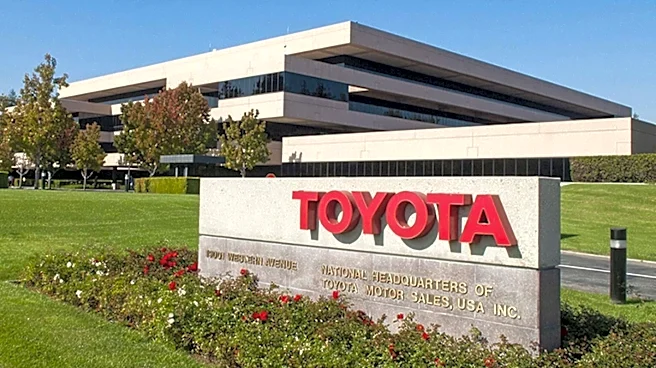
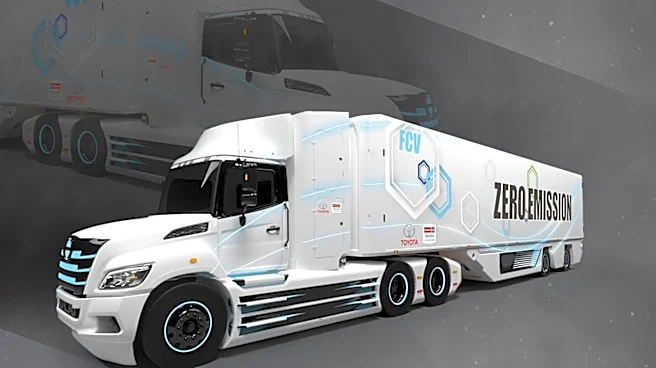
Toyota Motor North America's Hydrogen Headquarters (H2HQ) division is preparing to launch commercial hydrogen-powered trucks in 2027. The company has installed two mobile hydrogen fueling devices at its North American Parts Center California (NAPCC),
its largest U.S. parts distribution facility. These mobile fuelers will support commercial logistics fleets transporting freight from the Port of Los Angeles to Ontario and other regional destinations. Toyota plans to construct a permanent fueling station at the NAPCC site. This station will initially fuel heavy-duty trucks commissioned through Hyroad Energy and later integrate trucks equipped with Toyota's certified fuel cell powertrain. Additionally, Toyota is collaborating with the U.S. Department of Energy’s National Laboratory of the Rockies (NLR) to research 70 MPa high-flow hydrogen fueling for heavy-duty trucks, aiming to upgrade its private fueling infrastructure to this standard for testing purposes.
Why It's Important?
This initiative by Toyota signifies a significant step towards decarbonizing heavy-duty transportation in the U.S. The adoption of hydrogen fuel cell technology in commercial trucking offers a zero-emission alternative to traditional diesel engines, contributing to improved air quality and reduced greenhouse gas emissions. The development of high-flow fueling infrastructure, capable of refueling heavy-duty trucks in approximately 8 minutes for a range of up to 450 miles, addresses a critical challenge in hydrogen adoption: refueling speed and efficiency. This could accelerate the transition to hydrogen-powered fleets, impacting logistics, freight companies, and the broader energy sector. The public-private partnership with the U.S. Department of Energy also highlights a collaborative effort to advance hydrogen technology and infrastructure, potentially setting new industry standards and fostering further innovation in the clean energy sector.
What's Next?
Over the coming months, Toyota intends to upgrade its private fueling infrastructure at H2HQ to the high-flow standard for heavy-duty vehicle testing. The company also plans to install new equipment for light passenger fuel cell electric vehicles to evaluate station hardware and gather insights for operational improvements. Once the publicly available permanent station at NAPCC is operational, it will offer both conventional and high-flow hydrogen fueling for heavy-duty trucks, alongside a separate area for light-duty vehicles. This phased approach suggests a strategic rollout of hydrogen infrastructure and technology, starting with commercial applications and potentially expanding to broader consumer use. The success of these initial deployments will likely influence future investments and policy decisions regarding hydrogen as a viable energy source for transportation.
Beyond the Headlines
Toyota's commitment to hydrogen fuel cell technology stands in contrast to some other major automakers, such as General Motors and Stellantis, which have recently scaled back or discontinued their hydrogen fuel development programs, citing infrastructure limitations and high capital requirements. Toyota's continued investment, including patent applications for hybrid electric vehicles with hydrogen engines, suggests a long-term vision for hydrogen as a key component of its diversified powertrain strategy. This divergence in strategy could lead to different market outcomes, with Toyota potentially gaining a first-mover advantage in the hydrogen commercial vehicle segment. The ethical implications of transitioning to a hydrogen economy include ensuring sustainable hydrogen production, managing the environmental impact of infrastructure development, and addressing potential safety concerns associated with hydrogen storage and transport. The success of Toyota's efforts could also influence global energy policies and investment in hydrogen research and development.