




What's Happening?
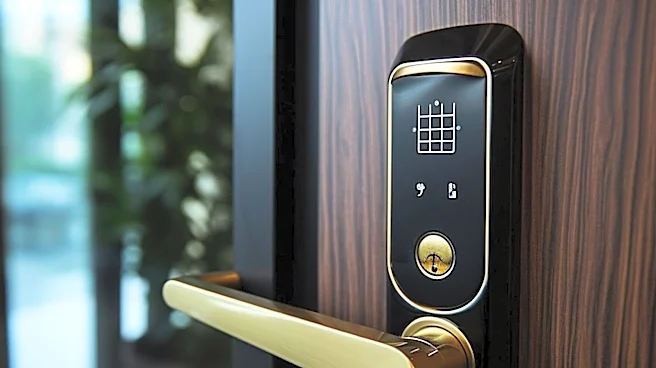
Himax Technologies (NASDAQ:HIMX) has announced that its WiseEye palm vein biometric technology is now powering the WAFERLOCK L322, a new smart lock from Taiwan-based WAFERLOCK Corporation. This smart lock utilizes palm vein patterns for user authentication,
offering an alternative to traditional fingerprint or facial scans. Himax highlights that this method remains effective even when hands are wet or dirty. The WiseEye platform is an ultralow-power AI system that integrates an image sensor and processor to capture, match, and verify palm vein images directly on the device, eliminating the need to send biometric data to the cloud. This on-device processing is a key selling point for applications like smart locks, addressing privacy concerns for homeowners. The palm vein modules have received TÜV Rheinland verification for accuracy, response speed, and liveness detection, and comply with GDPR privacy standards.
Why It's Important?
This development by Himax Technologies signifies a notable advancement in biometric authentication, particularly for on-device AI applications. The integration of palm vein technology into smart locks offers enhanced security and convenience for consumers, addressing limitations of other biometric methods. For the U.S. market, this technology could find applications beyond smart locks, extending into workforce management, computer monitors, and smart office equipment, thereby impacting various industries. The emphasis on on-device processing and GDPR compliance is crucial for building consumer trust and addressing privacy concerns, which are significant factors in the adoption of biometric technologies. This innovation could drive further competition and development in the biometric security sector, influencing how access control and personal authentication are managed in both residential and commercial settings.
What's Next?
While the WAFERLOCK deal is currently small in financial terms, it serves as a crucial test case for the broader market adoption of on-device AI biometrics beyond smartphones. Himax expects design-in activities for its palm vein technology to expand into various sectors, including workforce management and smart office equipment. The company's larger financial growth is still tied to automotive displays, where double-digit growth is anticipated, and newer ventures in smart glasses and co-packaged optics are expected to contribute significantly to revenue by 2027. The success of these newer businesses, alongside the continued expansion of the automotive sector, will be critical for Himax's overall growth. The company also faces challenges with semiconductor supply chain constraints, which could impact manufacturing costs and lead times, requiring strategic navigation to sustain its growth trajectory.
Beyond the Headlines
The shift towards on-device biometric processing, as exemplified by Himax's WiseEye technology, represents a deeper trend in data privacy and security. By performing authentication locally without cloud transmission, it mitigates risks associated with data breaches and unauthorized access to sensitive biometric information. This approach could set a new standard for privacy-conscious biometric solutions, influencing consumer expectations and regulatory requirements. However, it also raises questions about the computational power and sophistication required for effective on-device AI, as well as the potential for local vulnerabilities. The long-term impact could be a more decentralized and secure biometric ecosystem, but one that also demands continuous innovation to stay ahead of evolving security threats and maintain user trust in a world increasingly reliant on biometric authentication.