







What's Happening?
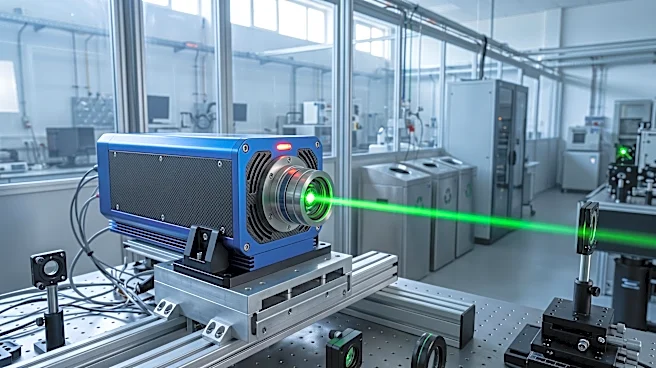
Researchers at the Netherlands Organisation for Applied Scientific Research have developed a new method for recycling retired solar panels using a pulsed laser. This innovative technique employs short pulses of green or near-infrared laser light to precisely
delaminate solar cells, separating the silicon wafer from the encapsulant and stripping the anti-reflective coating. Unlike conventional recycling methods that often shred entire panels, this laser-based approach allows for the clean separation of high-value materials. After the laser treatment, a subsequent wet chemical cleanup step recovers silicon at a near-complete purity level with a 97% yield, and silver at 99.7% purity, also with a 97% yield. This process significantly reduces the energy consumption compared to traditional thermal routes, using less than 1 kilowatt-hour per module for the laser step versus approximately 25 kilowatt-hours for pyrolysis. The technology has been tested on various real module types, including PERC, TOPCon, Al-BSF, polymer frontsheet, and IBC designs, demonstrating its versatility.
Why It's Important?
This development is crucial for the sustainability of the solar energy industry and the broader U.S. economy. As millions of solar panels reach the end of their operational life, efficient recycling methods are essential to prevent them from becoming a significant waste stream. The ability to recover 97% of silicon and silver, which are valuable and increasingly scarce resources, transforms discarded panels from waste into a 'goldmine' of raw materials. This reduces the reliance on newly mined resources, mitigating environmental impact and supply chain vulnerabilities. For U.S. industries, particularly those involved in battery manufacturing and solar panel production, access to high-purity recycled silicon can lower production costs and enhance domestic material security. The energy efficiency of the laser method also contributes to a greener recycling process, aligning with broader environmental goals and potentially creating new economic opportunities in the recycling sector. This innovation could also influence policy discussions around extended producer responsibility and circular economy initiatives for renewable energy technologies.
What's Next?
The immediate next steps involve scaling up this laboratory-demonstrated technology to an industrial level. Researchers need to develop a production line capable of processing thousands of panels daily and prove the economic viability of the method at full volume. This includes optimizing the logistics of feeding panels under the laser beam and ensuring the cost-effectiveness of the entire recycling process. The institute notes that silicon recovered from discarded modules is already suitable for reuse in battery anodes, and efforts are ongoing to further improve its purity to full solar grade. The increasing demand for silver in solar manufacturing, despite efforts to thin silver loading in new cells, makes reclaiming existing silver even more critical. Therefore, the focus will be on transitioning from a technical breakthrough to a scalable platform that can effectively mine the valuable materials from the growing wave of retired solar panels expected by 2030, particularly in regions like Europe and the U.S.
Beyond the Headlines
The deeper implications of this laser recycling technology extend beyond immediate material recovery. It represents a paradigm shift in how the end-of-life of renewable energy infrastructure is viewed, moving from waste management to resource optimization. Ethically, it addresses the environmental responsibility associated with the rapid expansion of solar energy, ensuring that the transition to clean energy doesn't create new ecological burdens. Legally, this could spur the development of new regulations and incentives for solar panel recycling, potentially leading to a more robust circular economy for photovoltaic materials. Culturally, it reinforces the idea that technological innovation can solve complex environmental challenges, fostering greater public confidence in sustainable practices. In the long term, this technology could establish a precedent for the recycling of other complex electronic waste, driving advancements in material science and engineering to unlock value from previously discarded products, thereby contributing to a more resource-efficient and sustainable future.