







What's Happening?
Students in the Rhode Island School of Design's (RISD) Industrial Design Department are engaging in a new course titled 'Dreams of the Inner Child,' which focuses on creating fun products through playfulness. Taught by retiring Associate Professor Khipra
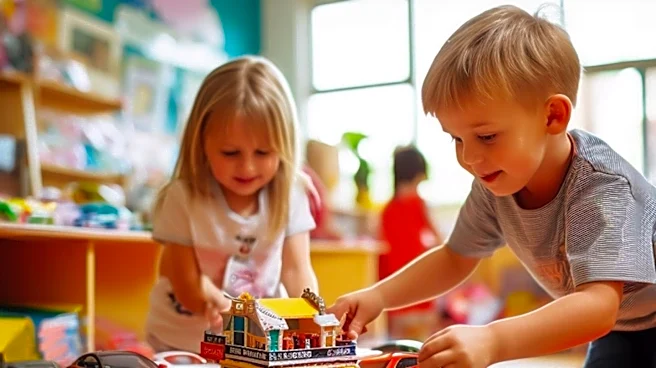
Nichols, a veteran toy designer known for his work on My Little Pony and Mrs. Potato Head, the course aims to teach students how to develop products that draw on play as a source of purposeful achievement. The curriculum includes field trips to Hasbro’s FunLab and the Providence Children’s Museum, where students observe children's interactions with toys. Students also participate in collaborative activities, such as 'Popcorn of the Beyond,' designed to foster self-reflection on design attributes. The course emphasizes user research, with students conducting play-tests with children, interviewing parents, and performing informal surveys to gather feedback. This research informs the development of prototypes, which are then presented at mid-semester critiques involving guest critics and RISD alumni from the toy industry. Projects range from play kits for outdoor exploration to modular rattles and mechanical learning toys, all designed to engage children's senses and foster discovery.
Why It's Important?
This initiative at RISD highlights the growing recognition of play as a fundamental aspect of human development and a critical area for industrial design innovation. By focusing on toy design and play-based learning, RISD is preparing future designers to create products that not only entertain but also educate and stimulate cognitive and sensory development in children. The emphasis on user research, including direct interaction with children and parents, ensures that designs are grounded in real-world needs and preferences, leading to more effective and impactful products. Furthermore, the involvement of industry veterans like Khipra Nichols and alumni from companies like Hasbro provides students with invaluable practical insights and networking opportunities, bridging the gap between academic learning and professional practice. This approach can lead to the development of innovative toys and educational tools that can positively influence childhood development and the broader market for children's products in the U.S.
What's Next?
As the semester progresses, students will continue to refine their individual and group projects, culminating in final proposals for branded lines of play products. These proposals will aim to engage the senses of children and adults alike, reflecting the course's core philosophy that 'play is largely about discovery' and 'toys are how young kids start to understand the world around them.' The ongoing development of these projects will likely involve further prototyping, material research, and user feedback integration. The course's success could also influence future curriculum development within RISD's Industrial Design Department, potentially leading to more specialized courses in toy design, child development, or play-based product innovation. The insights and designs generated by these students could also attract attention from toy manufacturers and educational product companies, potentially leading to collaborations or the commercialization of some student projects.
Beyond the Headlines
The 'Dreams of the Inner Child' course at RISD delves into the deeper implications of design by exploring the psychological and developmental aspects of play. It challenges students to consider not just the aesthetics and functionality of a product, but also its emotional impact and its role in shaping a child's understanding of the world. This approach fosters a more empathetic and human-centered design philosophy, encouraging designers to think beyond immediate utility to long-term developmental benefits. Ethically, the course promotes responsible design by emphasizing products that are safe, engaging, and developmentally appropriate. Culturally, it reinforces the value of play in a society that often prioritizes structured learning, highlighting how toys can be powerful tools for informal education and exploration. This focus on the 'inner child' also suggests a broader shift in design thinking, where products are increasingly designed to evoke joy, curiosity, and a sense of wonder, appealing to fundamental human desires for engagement and discovery across all age groups.