




What's Happening?
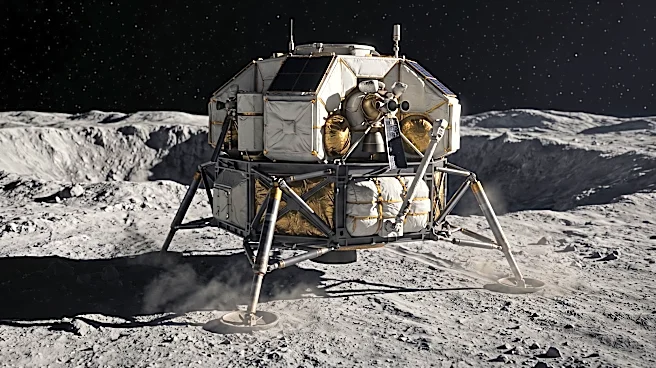
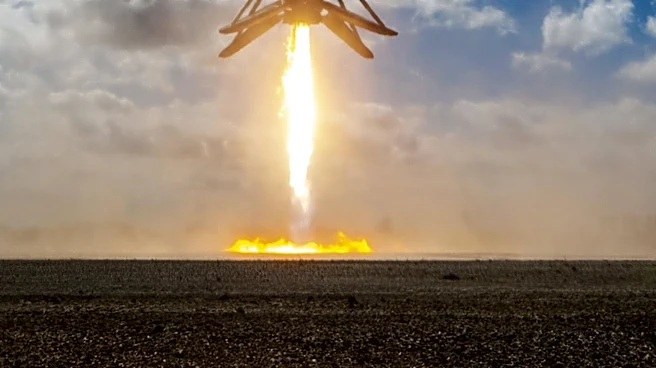
AST SpaceMobile has announced the launch of a project to develop a 20-ton reusable, custom-built rocket named 'Blacklift.' This rocket is designed to launch up to five 'BlueBird' satellites, with an anticipated first launch in late 2028. To facilitate
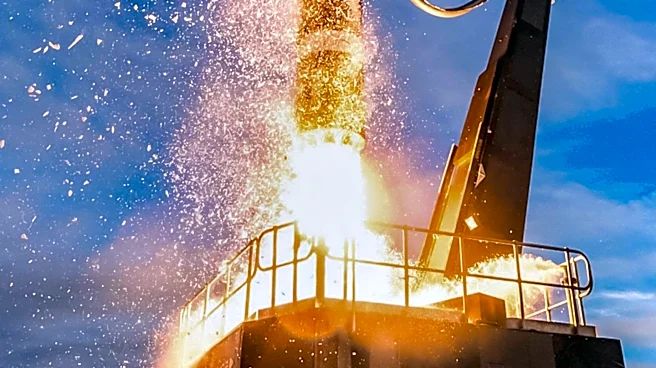
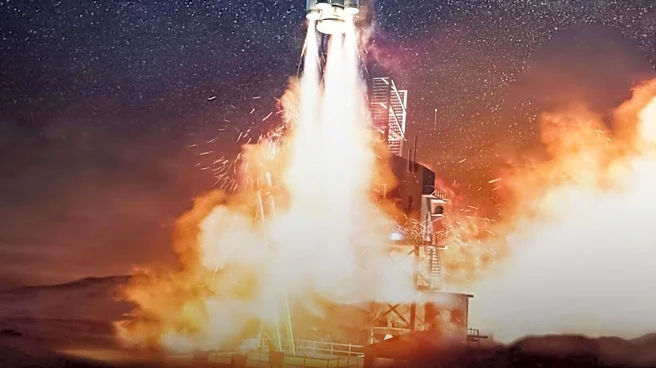
this, AST SpaceMobile has partnered with Firefly Aerospace, securing a deal for 27 Miranda engines for the first stage and nine Vira engines for the second stage for the initial three Blacklift rockets. The company also plans to acquire a perpetual license to manufacture these engines at a new facility in the U.S. This strategic move aims to reduce AST SpaceMobile's reliance on external launch providers and expand its market reach beyond direct-to-device (D2D) services into areas like secure communications, IoT, and AI compute. The financial commitment includes an upfront payment of approximately $800 million to Firefly Aerospace, comprising $400 million in cash and 10-14 million shares of stock, alongside $250 million for engine delivery and another $250 million over three years for engineering support.
Why It's Important?
This initiative is significant for AST SpaceMobile as it seeks to gain greater control over its satellite deployment capabilities, a critical factor for its 'BlueBird' low-Earth orbit (LEO) satellite constellation. By developing its own launch vehicle, the company aims to mitigate uncertainties associated with external launch capacity, which has historically been a bottleneck for satellite operators. This could lead to more predictable and cost-effective satellite deployments, potentially accelerating the rollout of its space-based cellular broadband network. The expansion into manufacturing engines in the U.S. also signifies a move towards vertical integration, which could enhance supply chain resilience and foster domestic aerospace manufacturing. However, the ambitious timeline for the Blacklift project has drawn skepticism from analysts, who point to the typical five-year development cycle for new rockets, suggesting that AST SpaceMobile's late 2028 target is 'aspirational.' Delays in rocket development are common, as evidenced by other major players like Blue Origin and SpaceX, which could impact AST SpaceMobile's strategic objectives and financial projections.
What's Next?
AST SpaceMobile plans to continue its agreements with external launch providers for over 100 BlueBird satellites scheduled for deployment between 2027 and 2028, even as it pursues the Blacklift project. The company will proceed with establishing its engine manufacturing facility in the U.S. and working with Firefly Aerospace on engine delivery and engineering support. The primary challenge will be adhering to the aggressive late 2028 launch timeline for Blacklift, which analysts view with skepticism. The success or delay of this project will significantly influence AST SpaceMobile's long-term strategy for satellite deployment and its ability to expand into new market segments. The company's ability to manage the complexities of rocket development and manufacturing, while simultaneously deploying its satellite constellation, will be closely watched by investors and industry observers.
Beyond the Headlines
The 'Blacklift' project highlights a growing trend among satellite operators to internalize launch capabilities, reflecting a desire for greater autonomy and cost control in the rapidly expanding space industry. This move could reshape the competitive landscape of the commercial space sector, potentially increasing competition for established launch providers. The decision to manufacture engines in the U.S. also carries broader implications for national security and economic development, fostering a domestic supply chain for critical space technologies. However, the inherent risks and capital intensity of rocket development mean that AST SpaceMobile is undertaking a substantial gamble. The project's success could set a precedent for other satellite companies, while significant delays or failures could serve as a cautionary tale, underscoring the formidable challenges of entering the launch services market.