






What's Happening?
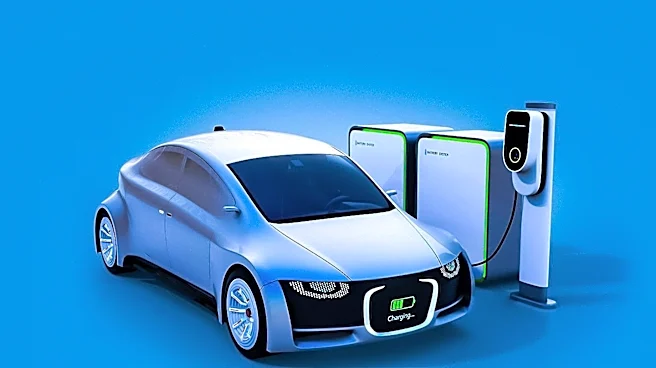
The global oil crisis has led to a significant increase in the sales of electrified vehicles, with China emerging as a major beneficiary due to its strong position in the battery supply chain. According to the International Energy Agency (IEA), sales of electric
vehicles (EVs) and plug-in hybrid electric vehicles (PHEVs) rose by 4% year-over-year and 35% over the previous quarter, reaching 29% of global car sales in 2026. The conflict between the US and Iran has caused fuel price spikes, making road vehicles, which account for nearly half of global oil use, particularly vulnerable to supply disruptions. Despite a downturn in the auto industry, with global car sales dropping by 5% in the first half of 2026, China has capitalized on the situation, increasing its share of electric car exports from 35% in 2025 to over 45% in the first half of 2026.
Why It's Important?
China's dominance in the battery value chain poses challenges for other countries seeking to compete in the EV market. The IEA report highlights China's integrated supply chains, strong battery capabilities, and lower production costs compared to advanced economies. This advantage allows China to tap into new markets, such as Europe, while other nations require coordinated efforts between government and industry to close the gap. The shift towards electrified vehicles is crucial for reducing dependency on oil and addressing environmental concerns. However, the geopolitical tensions and supply chain disruptions underscore the need for strategic planning and investment in alternative energy sources.
What's Next?
Countries outside China may need to enhance their battery production capabilities and strengthen supply chain resilience to compete effectively in the EV market. Governments and industries might collaborate to develop policies that support the growth of domestic battery manufacturing and incentivize the adoption of electric vehicles. Additionally, the ongoing US-Iran conflict could lead to further fuel price volatility, prompting more consumers to consider electrified vehicles as a viable alternative.