





What's Happening?
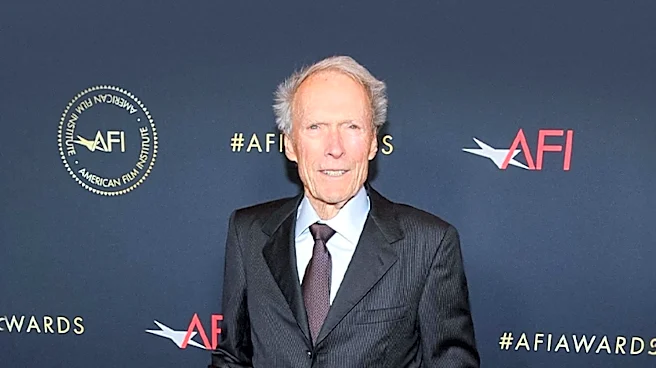
Clint Eastwood's 2014 film 'American Sniper,' which chronicles the life and military career of Chris Kyle, a U.S. Navy SEAL sniper, is being reviewed for its portrayal of war and heroism. The movie depicts Kyle's four tours in Iraq, where he achieved
160 confirmed kills, earning him the nickname 'The Legend.' The narrative covers his enlistment after the 1998 U.S. embassy bombings, his training as a Navy SEAL, and his experiences in Iraq, including his first kill involving a woman and child. The film also touches upon his personal life, including his marriage to Taya Studebaker and the challenges he faced transitioning back to civilian life after witnessing the horrors of war. The review notes that while the film is packed with action and strong performances, particularly from Bradley Cooper as Kyle, it struggles with maintaining a clear stance on the moral complexities of war, often appearing ambiguous.
Why It's Important?
The review of 'American Sniper' highlights a significant debate surrounding modern war movies: their role in shaping public perception of military service, patriotism, and the psychological impact of conflict. Eastwood's decision to present an ambiguous narrative, rather than taking a definitive stance on the morality of war or the glorification of its participants, has led to varied interpretations among audiences. This ambiguity can be seen as both a strength, allowing viewers to form their own conclusions, and a weakness, potentially leaving some feeling that the film lacks a clear message. The film's commercial success and critical discussion underscore the public's enduring interest in stories about military personnel and the challenges they face. Furthermore, the review points out instances where historical facts were altered for cinematic effect, raising questions about the responsibility of filmmakers when adapting real-life events, especially those involving sensitive topics like war and national heroes. The film's exploration of PTSD and the difficulty soldiers face in reintegrating into civilian life remains a crucial aspect, contributing to broader conversations about veteran support and mental health.
What's Next?
While 'American Sniper' was released in 2014, ongoing discussions and reviews like this one continue to shape its legacy and influence how future war films are perceived and created. The film's impact on public discourse about military service, the ethics of warfare, and the portrayal of real-life figures will likely persist. For filmmakers, the reception of 'American Sniper' serves as a case study in navigating complex narratives and audience expectations when dealing with sensitive historical and personal accounts. The film's commercial success may encourage studios to invest in similar biographical war dramas, while the critical debate surrounding its ambiguity might prompt future directors to consider more explicit thematic stances. The continued analysis of 'American Sniper' also contributes to the broader cultural conversation about how society remembers and interprets its military conflicts and the individuals involved.
Beyond the Headlines
The review delves into the ethical implications of cinematic portrayals of war, particularly when they involve real individuals and events. The film's ambiguity, while perhaps intended to allow for diverse interpretations, can also be seen as a missed opportunity to engage more deeply with the profound moral and psychological costs of war. The critique of the film's 'confusing jumble of conflicting tones' suggests that a lack of clear authorial intent can dilute a powerful subject matter. This raises questions about the responsibility of art to provoke thought and offer perspective, rather than merely presenting events. The film's depiction of Chris Kyle's struggle with returning home, despite its perceived vagueness, still highlights the universal challenge faced by many veterans. The discussion around the film's factual inaccuracies, such as the fictionalized rivalry with a Syrian sniper, underscores the tension between historical fidelity and dramatic license in biographical films, particularly when the subjects are figures of national significance. This ongoing dialogue contributes to a deeper understanding of how media shapes collective memory and national identity.