


What's Happening?
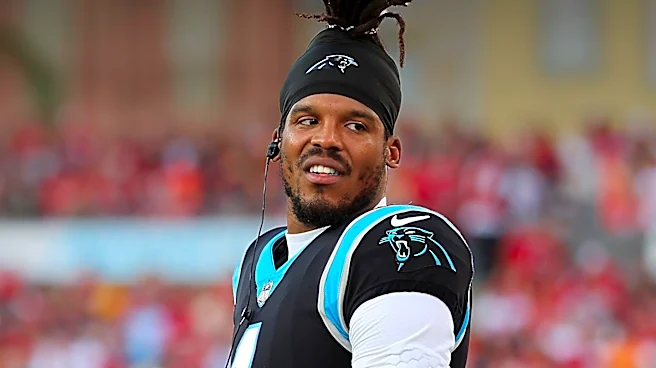
Hall of Famer Terrell Owens has publicly defended former Carolina Panthers quarterback Cam Newton, who has been vocal about the perceived pay disparity and lack of broadcasting opportunities for Black NFL players transitioning into media careers. Newton highlighted
the success of white ex-NFL stars like Troy Aikman, Tom Brady, Kirk Herbstreit, Tony Romo, and J.J. Watt in securing high-profile, lucrative broadcasting roles, while many Black former players are relegated to lower-tier positions or compelled to create their own platforms. Newton specifically mentioned Louis Riddick, who was replaced by Joe Buck and Aikman on Monday Night Football, and Ryan Clark, who was let go by ESPN and felt he had to suppress his identity to remain employed. Owens supported Newton after a fan criticized Newton's comments, stating, "You just don't like hearing the truth huh?!" and further elaborating on his own reasons for not pursuing broadcasting.
Why It's Important?
This ongoing discussion, amplified by figures like Cam Newton and Terrell Owens, brings to light significant issues of representation and equity within the sports media industry. It challenges the narrative that merit alone dictates broadcasting success, suggesting that systemic biases may be at play. The comments from Newton and Clark about feeling the need to alter their personalities or being overlooked for top roles resonate with broader conversations about racial bias in professional environments. This debate could pressure sports networks to re-evaluate their hiring practices and talent development pipelines, potentially leading to more diverse on-air talent. It also highlights the economic disparity that can follow athletes post-retirement, particularly if opportunities in lucrative media roles are not equally accessible, impacting their long-term financial stability and influence.
What's Next?
The continued public discourse from prominent figures like Cam Newton and Terrell Owens is likely to keep the issue of diversity in sports broadcasting in the spotlight. This could lead to increased scrutiny of network hiring decisions and potentially prompt internal reviews of diversity and inclusion policies within major sports media organizations. Other former Black NFL players may feel empowered to share their experiences, further fueling the conversation. Activist groups and media watchdogs might also become more involved, advocating for greater transparency and accountability in hiring practices. The debate could also inspire more Black former athletes to create independent media platforms, as Newton has done, to control their narratives and create opportunities that they feel are denied elsewhere. The long-term impact could be a gradual shift towards more equitable representation in sports media.
Beyond the Headlines
Beyond the immediate concerns of broadcasting roles, this discussion touches upon deeper societal issues of racial bias and systemic barriers in professional industries. The experiences shared by Cam Newton and Ryan Clark—feeling the need to conform or being overlooked despite qualifications—reflect broader challenges faced by minority professionals. It raises questions about the criteria used for evaluating talent, the influence of unconscious bias in hiring, and the cultural expectations placed on individuals from different backgrounds. The debate also highlights the power dynamics within media, where gatekeepers often shape public narratives and determine who gets to tell stories. This conversation could contribute to a larger movement advocating for diversity, equity, and inclusion across various sectors, pushing for a more representative media landscape that reflects the diverse audience it serves.