





What's Happening?
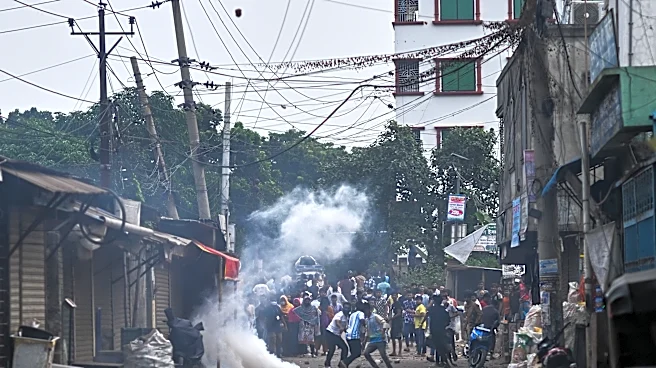
Wage protests by garment workers in Bangladesh have entered their fourth day, forcing the closure of several hundred factories and casting a shadow over the country's fragile economic recovery. Economists warn that the prolonged unrest could significantly
impact production and exports, further weakening the overall economy. While exports grew by 6% and remittances by 13% in the first four months of the fiscal year, other macroeconomic indicators present a mixed picture. Private sector credit growth fell to a record low of 4.17% in September, and inflation remains stubbornly high. Mustafizur Rahman, a distinguished fellow at the Centre for Policy Dialogue, noted that despite government initiatives, the recovery has not translated into higher investment, more jobs, or stronger growth. The unrest adds to existing challenges, including weak investment and a lack of business activity.
Why It's Important?
The garment sector is crucial to Bangladesh's economy, contributing over 80% of its export earnings. The ongoing unrest directly threatens this vital industry, potentially leading to a decline in export revenue and a loss of international buyer confidence. This instability could exacerbate the country's economic vulnerabilities, including its foreign exchange reserves, inflation control, and efforts to reduce non-performing loans. Economists emphasize that prolonged disruptions could create a vicious cycle, discouraging fresh investment and hindering job creation. The situation highlights the delicate balance between addressing workers' legitimate demands for higher wages and maintaining economic stability and competitiveness in the global market. The impact could be felt across various sectors, as the garment industry's performance is closely linked to the broader economic health of Bangladesh.
What's Next?
Economists are urging for credible dialogue between workers, employers, and the government to address wage and cost-of-living concerns. While the government has initiated a minimum wage fixing process, the continuation of protests suggests that a comprehensive solution is still needed. Reforms aimed at strengthening Bangladesh's overall competitiveness are also deemed essential, particularly as the country prepares to graduate from the least developed country (LDC) category. Key areas of focus include ensuring a steady improvement in foreign exchange reserves, gradually bringing down inflation, reducing non-performing loans, and improving revenue collection. The ability to manage rising energy costs and ensure uninterrupted supplies to export-oriented industries will also be critical in mitigating the economic fallout from the garment unrest.
Beyond the Headlines
The garment unrest in Bangladesh exposes deeper structural issues within the country's economy, including weak investment, logistical problems, and other barriers to industrial expansion. The warnings from economists about the potential for similar problems to emerge in other industries if industrial capacity is not expanded underscore a broader challenge of economic diversification and sustainable growth. The situation also highlights the social dimension of economic policy, where the failure to address workers' grievances can have significant economic consequences. The call for reforms to strengthen competitiveness and improve business confidence suggests a need for a holistic approach that integrates economic development with social equity. The long-term implications could involve a re-evaluation of Bangladesh's industrial strategy and its approach to labor relations to ensure a more resilient and inclusive economy.