








What's Happening?
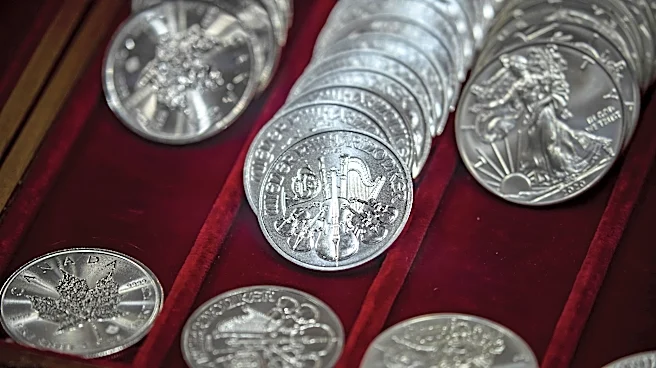
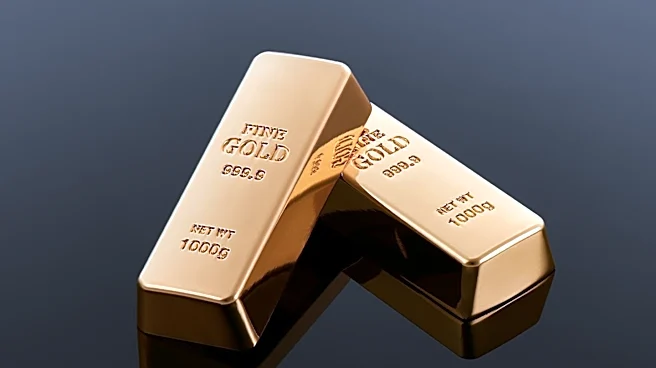
Spot gold and silver prices have increased following the North American cash-market close, marking a rebound as the third quarter begins. Gold is trading near $4,036.90 per ounce, up 0.75%, while silver is at $59.070, up 1.03%. This rise comes despite
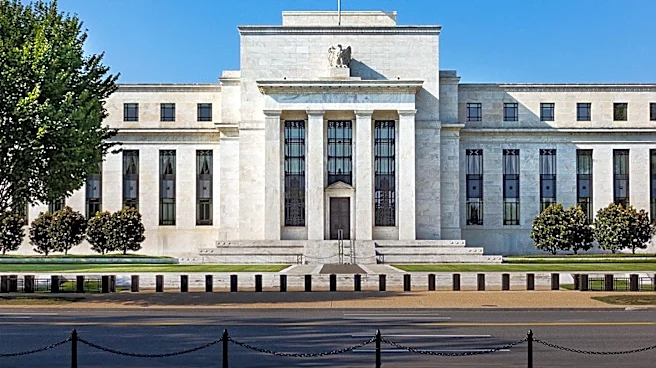
a firmer U.S. dollar and higher Treasury yields, which typically exert downward pressure on precious metals. The market is closely watching the upcoming June employment report, which could influence future Federal Reserve policy decisions. The report is expected to show a slowdown in job growth, with private payrolls rising by 98,000 in June, down from 122,000 in May. The broader expectation is for 110,000 jobs to be added, down from 172,000 in May. This setup leaves gold and silver prices vulnerable to changes based on the employment data, with a strong report potentially supporting the dollar and yields, while a weaker report could bolster the metals' rebound.
Why It's Important?
The movement in gold and silver prices is significant as it reflects broader economic conditions and investor sentiment. Precious metals are often seen as a hedge against inflation and economic uncertainty. The current price dynamics suggest that investors are positioning defensively ahead of key economic data releases. A strong employment report could lead to a stronger dollar and higher yields, which would typically decrease demand for non-yielding assets like gold and silver. Conversely, a weaker report could increase demand for these metals as safe-haven assets. The outcome of the employment report could also influence Federal Reserve policy, impacting interest rates and economic growth expectations.
What's Next?
The next key event is the release of the June nonfarm payrolls report, which will provide further insights into the U.S. labor market and potentially influence Federal Reserve policy. Depending on the report's outcome, there could be significant movements in the dollar, Treasury yields, and precious metals prices. Investors will be closely monitoring these developments to adjust their positions accordingly. Additionally, geopolitical factors, such as the situation in the Strait of Hormuz, could also impact market dynamics, particularly in the energy sector, which in turn could affect inflation expectations and precious metals prices.