



What's Happening?
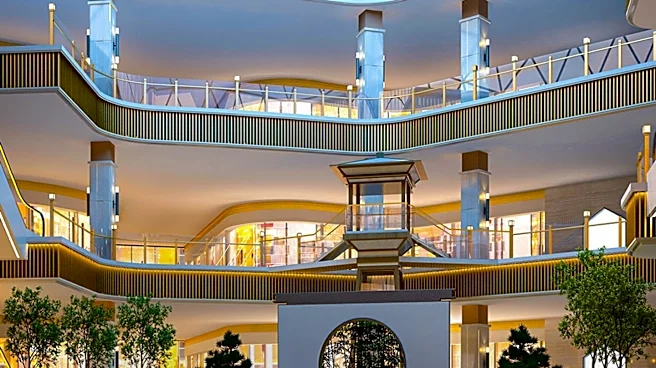
Resorts World New York City has commenced the second phase of its $5.5 billion expansion in South Ozone Park. The project includes a new hotel tower, a 7,000-seat multipurpose arena, and additional gaming, entertainment, dining, and retail spaces. The expansion is
expected to create 10,000 jobs, including 5,000 union construction jobs. Resorts World NYC, which recently expanded its gaming operations to include table games, aims to become a leading entertainment destination in Queens. The project is one of the largest private investments in New York City's history and is anticipated to generate significant tax revenue for state education and transit.
Why It's Important?
The expansion of Resorts World NYC represents a major economic development for Queens and New York City. The project is expected to boost local employment, attract tourism, and generate substantial tax revenue. The new facilities, including the hotel and arena, will enhance the area's appeal as a destination for entertainment and leisure. The expansion also reflects broader trends in the gaming and hospitality industries, as companies invest in large-scale developments to attract diverse audiences. The project's success could influence future investments in similar developments across the city and state.
What's Next?
As construction progresses, Resorts World NYC will continue to collaborate with local government and community stakeholders to ensure the project's successful completion. The expansion is expected to be completed with union labor, supporting local workforce development. The new facilities are anticipated to open in phases, with the full expansion projected to be completed in the coming years. The project's impact on the local economy and community will be closely monitored, and its success could pave the way for future developments in the region.
Beyond the Headlines
The expansion of Resorts World NYC highlights the intersection of economic development and community impact. The project raises questions about the balance between large-scale investments and local needs, including concerns about potential gentrification and displacement. The development also underscores the importance of sustainable and inclusive growth, as stakeholders work to ensure that the benefits of the project are shared equitably. The expansion may serve as a model for future projects that aim to integrate economic growth with community well-being.