







What's Happening?
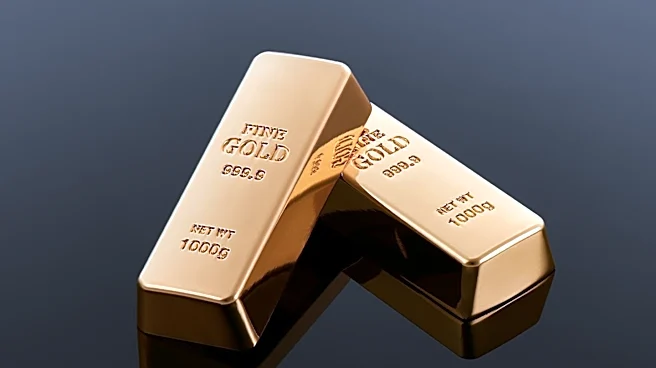
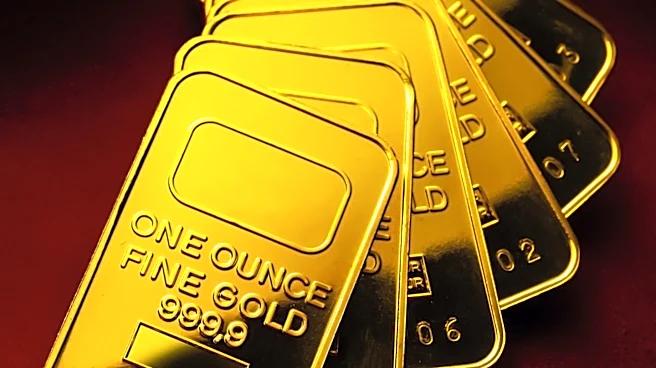
Gold prices have experienced a significant increase, marking their first weekly gain in five weeks. This rise is attributed to a reduction in expectations for Federal Reserve interest rate hikes, following weaker-than-expected U.S. jobs data. Spot gold
rose by 1.4% to $4,179.94 per ounce, while U.S. gold futures for August delivery increased by 1.6% to $4,193.20. The softer U.S. labor market data, with nonfarm payrolls increasing by only 57,000 jobs compared to the forecasted 110,000, has led investors to reassess the likelihood of future rate hikes. As a result, the dollar is headed for a weekly drop, making gold more affordable for holders of other currencies.
Why It's Important?
The rise in gold prices is significant as it reflects broader economic sentiments and investor behavior in response to U.S. monetary policy. The easing of rate hike expectations suggests a shift in market confidence regarding the Federal Reserve's approach to managing inflation and economic growth. This development impacts various stakeholders, including investors, central banks, and industries reliant on precious metals. Central banks have resumed gold purchases, with official reserves increasing by 41 tons in May, indicating a strategic move to hedge against economic uncertainties. The trend also affects the currency market, as a weaker dollar enhances the appeal of dollar-priced commodities like gold.
What's Next?
Looking ahead, the market will closely monitor upcoming economic data and Federal Reserve communications to gauge future monetary policy directions. Traders are currently pricing in a 54% chance of a rate hike in September, down from 66% prior to the jobs report. This uncertainty may lead to further volatility in gold prices. Additionally, the potential for another leg of gold price weakness remains if rate hike expectations are adjusted again. Stakeholders, including investors and policymakers, will need to navigate these dynamics as they unfold.