







What's Happening?
UPS CEO Carol Tomé has affirmed the safety and security of the company's dividend, despite its $4.1 billion outlay sitting just below the $4.2 billion in free cash flow generated year-to-date. This period included property sales, pension contributions,
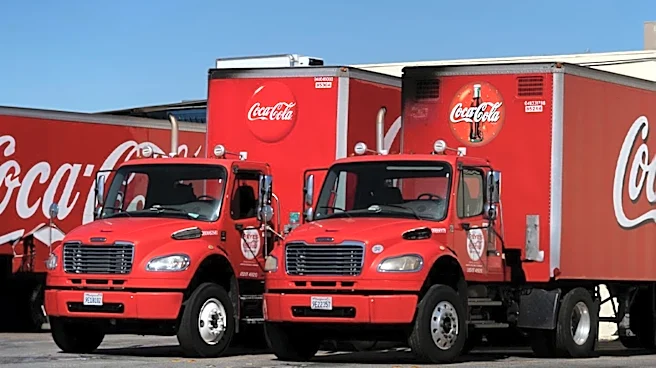
and a voluntary buyout and severance program. UPS recently raised its full-year earnings per share (EPS) guidance to $7.28, driven by a 6.1% improvement in domestic revenue per piece. This financial performance contrasts with Coca-Cola, which trades at a higher valuation of approximately 28 times earnings compared to UPS's less than 15 times earnings. Coca-Cola has a more comfortable dividend coverage, with $11.4 billion in free cash flow against $6.8 billion paid out, and has raised its dividend for 64 consecutive years. Both companies reported solid third-quarter results, but their market valuations have diverged significantly.
Why It's Important?
The differing valuations and dividend coverage between UPS and Coca-Cola highlight a key trade-off for income investors: the balance between dividend safety and potential upside. UPS's lower price-to-earnings ratio and higher dividend yield (above 6%) could attract investors seeking value and higher immediate returns, especially if CEO Tomé's projection of improved free cash flow in 2027 materializes. However, Coca-Cola's long history of dividend increases and stronger payout coverage offers a more secure option for risk-averse investors. The market's pricing of these two companies reflects their current operational narratives: UPS is undergoing a turnaround, optimizing its Amazon business for profitability, while Coca-Cola is experiencing volume-driven growth. This divergence impacts investment strategies, as investors must weigh the stability and consistent growth of a Dividend King like Coca-Cola against the potential for greater returns from a company like UPS that is in a restructuring phase.
What's Next?
UPS management anticipates an improvement in free cash flow in 2027, which would further strengthen the coverage of its dividend and potentially reassure investors about its long-term sustainability. The company's ongoing turnaround efforts, including the optimization of its Amazon business, are expected to continue driving improvements in domestic revenue per piece and adjusted operating margins. Investors will be closely watching future earnings reports and free cash flow statements to assess the progress of these initiatives. The market will also continue to evaluate the relative attractiveness of UPS's higher dividend yield against Coca-Cola's established dividend safety and consistent growth, influencing investment flows between these two distinct corporate profiles.
Beyond the Headlines
The situation with UPS and Coca-Cola illustrates broader market dynamics where companies in different stages of their business cycles are valued distinctly. UPS's journey reflects the challenges and opportunities in the logistics sector, particularly with evolving e-commerce demands and the need for operational efficiency. The company's strategic decision to right-size its Amazon business for profitability, rather than sheer volume, indicates a shift towards quality over quantity in certain segments. This approach could set a precedent for other logistics providers. Conversely, Coca-Cola's consistent dividend growth underscores the enduring power of established consumer brands and their ability to generate stable cash flows, even in varying economic conditions. The contrasting investment appeals of these two companies highlight the diverse strategies investors employ, from seeking high-yield opportunities in turnaround stories to prioritizing long-term dividend reliability.