







What's Happening?
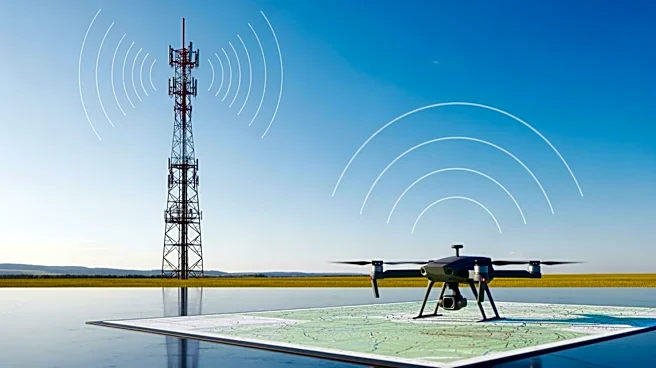
The expansion of Real-Time Kinematic (RTK) networks is significantly improving the accuracy and reliability of field positioning for various industries, including drone operations and surveying. RTK networks, which consist of numerous base stations, provide
high-accuracy positioning data by correcting signals received from GNSS (Global Navigation Satellite System) receivers. The presence of over 20,000 base stations across more than 140 countries ensures that users can access dependable correction data, enhancing field productivity and repeatability. This network expansion is crucial for industries that require precise positioning, such as construction, infrastructure, and agriculture, where accurate data collection is essential for operations like mapping, inspections, and machine guidance.
Why It's Important?
The increased coverage of RTK networks is vital for industries that rely on precise positioning data to maintain operational efficiency and accuracy. For drone operators, surveyors, and construction teams, access to a dense network of RTK stations means reduced setup times, fewer interruptions, and improved data consistency. This is particularly important in sectors where accurate positioning can impact project timelines and costs. The ability to maintain high-accuracy positioning over large areas without the need for temporary local bases or complex setup procedures enhances productivity and reduces operational friction. As industries continue to adopt advanced technologies for field operations, the demand for reliable RTK networks is expected to grow, supporting the broader adoption of automation and precision technologies.
What's Next?
As the demand for precise positioning data continues to rise, further expansion of RTK networks is anticipated. This expansion will likely involve increasing the number of base stations and improving network infrastructure to support more users and devices. Industries that rely on RTK data will benefit from ongoing advancements in network technology, which will enhance the accuracy and reliability of positioning data. Additionally, as more sectors recognize the value of precise positioning, there may be increased investment in RTK technology and related services, driving further innovation and integration into various operational workflows.