



What's Happening?
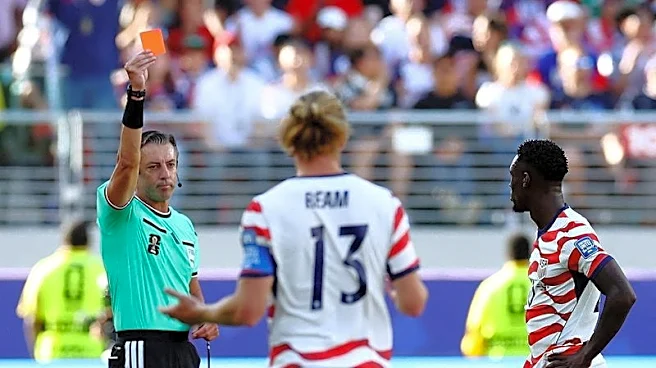
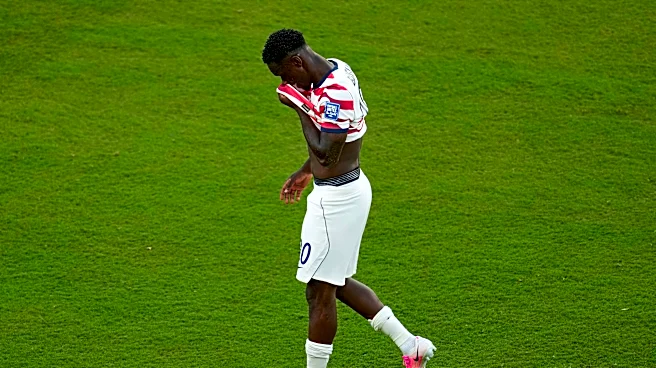
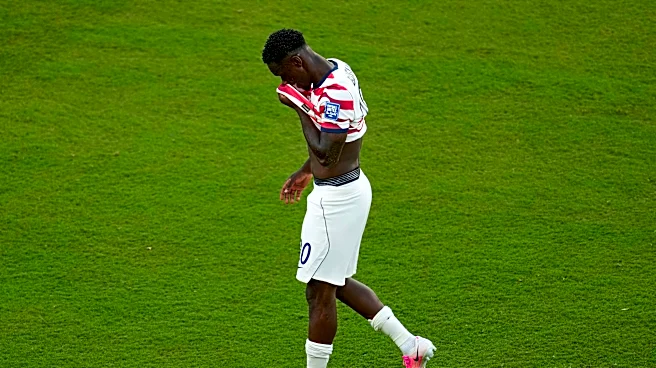
The Royal Belgian Football Association's appeal against FIFA's decision to allow Folarin Balogun to play in the World Cup match against Belgium has been denied. Balogun, who received a red card in a previous match, was initially banned for one game. However,
FIFA suspended the ban, allowing him to participate in the upcoming match. The Belgian FA expressed its astonishment at the decision, arguing that it contradicts established guidelines. Despite the appeal, FIFA maintained its stance, citing procedural issues with the appeal process. The decision has sparked controversy, with UEFA also criticizing FIFA's actions as undermining the integrity of the competition.
Why It's Important?
The denial of Belgium's appeal and FIFA's decision to suspend Balogun's ban have significant implications for the fairness and consistency of disciplinary actions in international soccer. This situation highlights potential gaps in FIFA's regulatory framework and raises questions about the influence of external factors, such as political pressure, on sports governance. The controversy could lead to calls for reforms in how disciplinary decisions are made and communicated, ensuring transparency and fairness. Additionally, the decision may affect the competitive balance in the World Cup, as teams may perceive an uneven application of rules.
What's Next?
Following the denial of their appeal, the Belgian FA may consider further actions to address their concerns, potentially involving other governing bodies or legal avenues. This situation could prompt FIFA to review its disciplinary procedures to prevent similar controversies in the future. The incident may also lead to broader discussions within the international soccer community about the need for clearer and more consistent enforcement of rules. Stakeholders may push for reforms to enhance the transparency and accountability of FIFA's decision-making processes, ensuring that all teams are treated fairly and equitably.