








What's Happening?
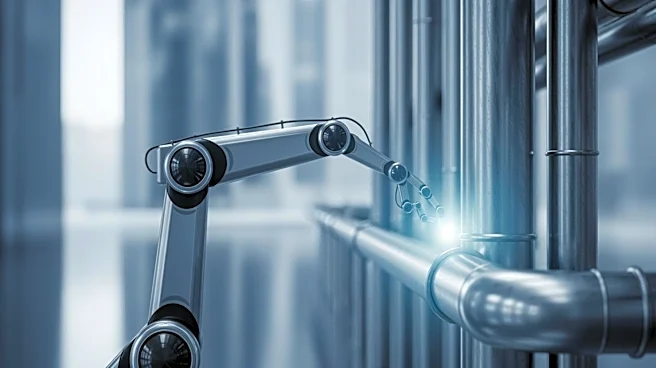
DEEP Robotics has unveiled the Lynx M20, an advanced robot designed to navigate and maintain urban utility tunnels, which are critical to modern city infrastructure. These tunnels, often hazardous for human workers due to risks like toxic gas leaks and high-voltage
electrical dangers, are now being patrolled by the Lynx M20. This robot combines wheeled and legged mobility to traverse complex underground environments, using sensors to detect issues such as gas leaks and thermal anomalies. The Lynx M20 streams real-time data to a centralized system, enabling predictive maintenance and reducing reliance on human inspections.
Why It's Important?
The introduction of the Lynx M20 represents a significant advancement in urban infrastructure management. By automating the inspection and maintenance of utility tunnels, cities can enhance safety and efficiency. This technology reduces the risk to human workers and allows for more timely identification and resolution of potential issues, preventing costly and dangerous failures. As urban areas continue to expand and infrastructure becomes more complex, the demand for such automated solutions is expected to grow, potentially transforming how cities manage their critical systems.
What's Next?
The deployment of the Lynx M20 is likely to expand as cities worldwide invest in modernizing their infrastructure. The robot's success in real-world applications, such as Singapore's PowerGrid and other international projects, suggests a growing market for automated maintenance solutions. As more cities adopt this technology, there may be increased collaboration between technology providers and municipal governments to further integrate these systems into urban planning and management strategies.
Beyond the Headlines
The use of robots like the Lynx M20 in urban infrastructure maintenance raises questions about the future of labor in this sector. While automation can improve safety and efficiency, it may also lead to job displacement for workers traditionally involved in these tasks. Additionally, the reliance on advanced technology necessitates robust cybersecurity measures to protect critical infrastructure from potential threats.