





What's Happening?
Ford Motor Company, headquartered in Dearborn, Michigan, recently released its third-quarter results, reporting an adjusted Earnings Per Share (EPS) of $0.49, which surpassed analyst consensus. The company's adjusted Earnings Before Interest and Taxes
(EBIT) increased by approximately 3% year-over-year, reaching about $2.7 billion. However, revenue saw a slight decline of about 2% to nearly $49.5 billion, primarily due to reduced wholesale volumes. A significant point of concern was the Model e segment, which focuses on electric vehicles, recording an EBIT loss of approximately $1.1 billion. Despite this, management raised the lower bound of its full-year adjusted EBIT guidance to $10.5–$11 billion, while maintaining its free-cash-flow guidance. The company also declared a quarterly dividend of $0.15. Ford's stock has recently traded near the lower end of its 52-week range, stabilizing around $12 after a previous rally tied to its Ford Energy battery-storage unit.
Why It's Important?
These results highlight the ongoing transition and challenges within the automotive industry, particularly for traditional automakers like Ford as they invest heavily in electric vehicles. The strong performance in adjusted EPS and EBIT, coupled with increased full-year guidance, suggests resilience in Ford's core business segments, such as Ford Blue (gas-powered and hybrid vehicles) and Ford Pro (commercial vehicles and services). However, the substantial loss in the Model e segment underscores the significant financial burden and investment required for EV development and market penetration. This situation impacts U.S. manufacturing and employment, as Ford is a major employer. The company's ability to manage these EV losses while maintaining profitability in other areas is crucial for its long-term stability and competitiveness against both traditional rivals and new EV manufacturers. The dividend declaration also signals confidence to income-focused investors, despite the cyclical nature of the auto industry.
What's Next?
Looking ahead, investors will closely monitor Ford's ability to sustain margin improvement into the next year, especially as management has indicated that 2027 adjusted EBIT might remain relatively flat due to rising commodity, memory, and logistics costs, alongside retooling expenses for EVs. Key developments include the launch of the Fathom electric vehicle, with a starting MSRP near $28,350, and the continued ramp-up of the Ford Energy battery-storage unit, which has already secured contracts covering over 80% of its 2028 capacity. Ford aims for the Model e segment to break even by 2029. The company also faces ongoing operational challenges, such as supplier component shortages that recently affected F-150 production and new recall headlines impacting quality-cost concerns. The market will also be watching for any shifts in sentiment regarding its licensed Chinese battery technology and the broader enthusiasm for AI-driven energy storage.
Beyond the Headlines
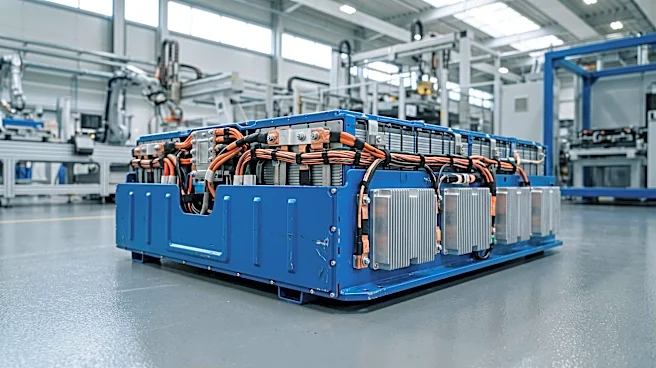
The mixed financial performance of Ford reflects a broader strategic tension within the automotive sector: balancing the profitability of established internal combustion engine (ICE) and hybrid vehicle lines with the massive, often loss-making, investments in electric vehicle technology. Ford's commitment to its Ford Energy unit, focusing on grid-scale battery storage, indicates a diversification strategy beyond traditional vehicle manufacturing, potentially positioning the company as a key player in the evolving energy infrastructure. This move could have significant implications for U.S. energy independence and the integration of renewable energy sources. The challenges in the Model e segment also highlight the complexities of scaling EV production, including supply chain vulnerabilities and the intense competition in the EV market. The long-term success of Ford, and by extension, a significant portion of the U.S. auto industry, hinges on its ability to navigate these technological shifts, manage costs, and effectively transition its workforce and manufacturing capabilities.