



What's Happening?
Hyundai Motor Group has signed a Letter of Intent (LOI) with the African Development Bank (AfDB) to foster industrial development and sustainable growth across Africa. This collaboration aims to integrate Hyundai's expertise in mobility, energy, and infrastructure
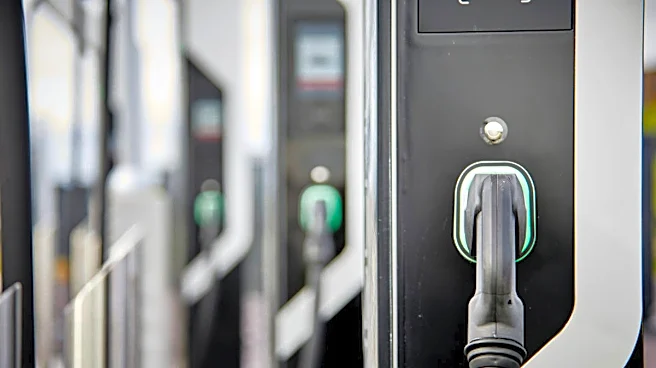
with AfDB's financial and business development capabilities. The partnership outlines six key areas of strategic cooperation: clean energy transition, sustainable mobility solutions, transport and logistics infrastructure, electric vehicle (EV) value chain development, industrial capacity enhancement, and talent development. A core component of this initiative is the establishment of a Blended Finance Package, designed to combine policy financing with private capital, ensuring investment stability for Hyundai's business ventures in Africa. This agreement signifies a long-term commitment from both organizations to support Africa's economic transformation.
Why It's Important?
This partnership is significant for the U.S. and global stakeholders as it highlights a growing trend of international corporations engaging in multilateral development efforts in emerging markets. For the U.S., such collaborations can indirectly support stability and economic growth in regions vital for global trade and security. The focus on clean energy, sustainable mobility, and EV value chain development aligns with global climate goals and the transition to a green economy, potentially creating new markets and technological advancements that could influence U.S. industries. By strengthening industrial capacity and developing talent in Africa, the initiative could reduce reliance on external aid and foster self-sufficient economies, which can lead to more stable international partners. The Blended Finance Package model could also serve as a blueprint for future public-private partnerships aimed at sustainable development, offering a new approach to financing large-scale projects in developing nations.
What's Next?
Following the signing of the LOI, Hyundai Motor Group and the AfDB are expected to begin implementing the outlined strategic cooperation areas. This will likely involve detailed planning and execution of projects related to clean energy, sustainable mobility, and infrastructure development. The establishment of the Blended Finance Package will be a critical next step, as it will determine the financial mechanisms for these initiatives. Both organizations will focus on leveraging their respective strengths: Hyundai's operational and technological expertise and AfDB's development financing and investment mobilization capabilities. Future announcements may include specific project launches, investment commitments, and progress reports on the development of the EV value chain and industrial capacity in African nations. The success of this partnership could encourage other international corporations to adopt similar multilateral approaches to development.
Beyond the Headlines
Beyond the immediate economic and developmental impacts, this partnership carries deeper implications for global governance and corporate responsibility. It underscores a shift towards a more integrated approach to development, where private sector innovation is directly linked with multilateral development resources. This model challenges traditional aid paradigms by emphasizing sustainable, market-driven solutions. Ethically, it raises questions about equitable benefit sharing and ensuring that local communities are genuinely empowered, not just recipients of foreign investment. Culturally, the integration of advanced technologies like EVs and clean energy infrastructure could accelerate modernization and alter societal structures in African nations. The long-term success will depend on effective governance, transparency, and the ability to navigate complex geopolitical landscapes, potentially setting a precedent for how multinational corporations engage with developing economies in the 21st century.