








What's Happening?
Fort Worth's office market has experienced a fifth consecutive quarter of occupancy gains, indicating a sustained recovery. According to a third-quarter report by JLL, the market recorded 78,113 square feet of positive net absorption, which measures the change
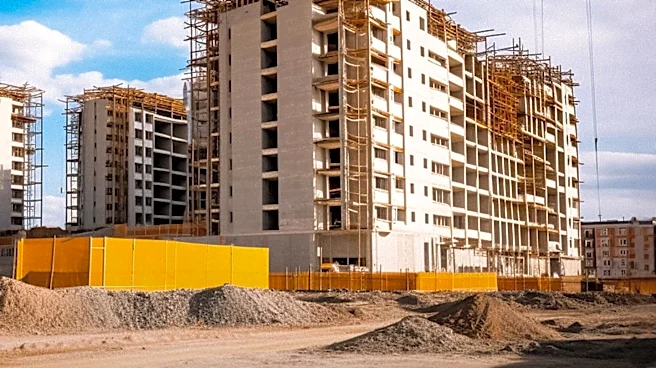
in occupied space. The total vacancy rate in Fort Worth stood at 18% in the third quarter, with declines observed in both Class A and Class B properties. Specifically, Class A vacancy was 12.5%, and Class B vacancy was 22.5%. Leasing activity has increased compared to both the previous quarter and the same period last year, with over a dozen new leases exceeding 10,000 square feet signed. This activity was primarily concentrated in North Fort Worth and Westlake/Southlake. The largest transaction involved Goosehead Insurance's renewal and expansion at The Terraces at Solana in Westlake/Southlake, encompassing nearly 250,000 square feet. New construction is also progressing, with a mixed-use building at The Shops at Clearfork being the first delivery in the West/Southwest Fort Worth development cycle, with approximately 90% of its office space already leased.
Why It's Important?
The continued recovery of the Fort Worth office market is a significant indicator of economic health and business confidence in the region. A sustained period of positive net absorption and declining vacancy rates suggests a growing demand for office space, which can lead to increased investment, job creation, and overall economic expansion. The rise in asking rents across the market, with an average direct asking rent of $30.14 per square foot overall and $38.55 for Class A properties, reflects a strengthening market and potentially higher returns for property owners and developers. The concentration of leasing activity in specific submarkets like North Fort Worth and Westlake/Southlake highlights areas of robust growth and potential for future development. However, the report also notes a potential challenge for Downtown Fort Worth, where existing tenants relocating to newer properties could lead to increased Class A vacancy, impacting property values and rental income in that submarket. This dynamic underscores the importance of modern, high-quality office spaces in attracting and retaining tenants.
What's Next?
JLL anticipates that the total vacancy rate in Fort Worth will continue to decline in the near term. However, new deliveries and additional groundbreakings scheduled for 2027 could temporarily push vacancy rates higher as these new buildings await tenants. The market is on track for both Class A and Class B properties to achieve positive net absorption for the first time since 2021, reversing a three-year trend of negative annual results. The identified development pipeline includes 377,041 square feet under construction, with 29.9% preleased, expected to begin delivery in the second half of 2027. Downtown Fort Worth faces a specific challenge as tenants move to newer properties, potentially increasing Class A vacancy in that submarket. This suggests that property owners in older or less modern buildings may need to consider renovations or competitive strategies to retain tenants. The ongoing recovery and new construction indicate a dynamic market that will require continuous monitoring of supply and demand to understand future trends and potential impacts on rental rates and property values.
Beyond the Headlines
The ongoing recovery in Fort Worth's office market, while positive, also highlights a broader trend in commercial real estate: the increasing demand for modern, high-quality office spaces. The potential for increased Class A vacancy in Downtown Fort Worth due to tenant relocation suggests a flight to quality, where businesses prioritize newer facilities with better amenities and potentially more efficient layouts. This trend could lead to a widening gap between the performance of Class A and older Class B or C properties, prompting owners of less modern buildings to invest in significant upgrades or consider alternative uses for their properties. Furthermore, the emphasis on positive net absorption and declining vacancy rates underscores the importance of a vibrant local economy that can support business growth and expansion. The long-term implications could include a revitalization of certain submarkets that offer new developments, while older central business districts might face pressure to adapt to evolving tenant preferences. This shift could also influence urban planning and development strategies, with a focus on creating attractive, mixed-use environments that cater to the needs of modern businesses and their employees.