





What's Happening?
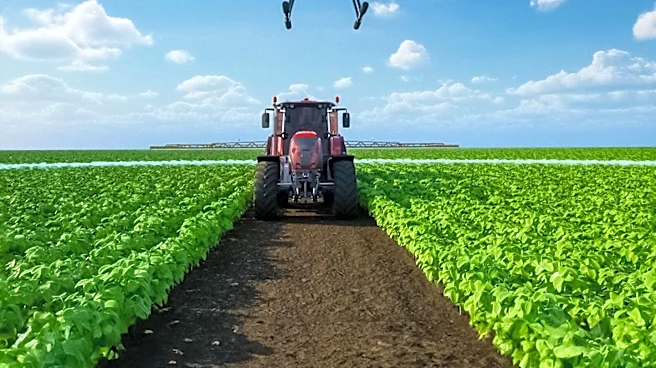
Autonomous Solutions Inc. (ASI), in collaboration with U.S. Sugar Corp. and Everglades Equipment Group, has deployed the largest autonomous vehicle fleet in the history of American sugarcane farming across hundreds of thousands of acres in South Florida.
This initiative is a full operational deployment, not a pilot program, and is already yielding results. ASI's Mobius platform, which is manufacturer-agnostic, has been integrated into U.S. Sugar's existing John Deere tractors, transforming them into fully autonomous workhorses. This deployment aims to address significant challenges in modern agriculture, including a shrinking workforce, rising input costs, and unpredictable weather patterns. The autonomous tractors are demonstrating higher accuracy in land preparation than human operators, operating beyond standard working hours, and maintaining consistency despite weather and crew variability that previously caused delays. U.S. Sugar has committed to retaining its current employees, retraining tractor operators for supervisory roles that manage these autonomous fleets.
Why It's Important?
This deployment represents a significant shift in the labor model for large-scale agricultural operations in the U.S. By enabling one operator to manage multiple vehicles simultaneously, it fundamentally changes the economics of farming, particularly for extensive operations like U.S. Sugar's. The technology provides a critical safeguard against economic losses caused by weather events and labor shortages, allowing work to continue regardless of crew availability or time of day. The ability of autonomous systems to operate with higher accuracy and consistency can lead to improved crop yields and reduced operational costs. Furthermore, U.S. Sugar's commitment to retraining its workforce for higher-skilled supervisory roles demonstrates a model for how automation can be integrated without immediate job displacement, focusing instead on upskilling the existing labor force. This approach could set a precedent for other agricultural companies facing similar challenges, promoting a more resilient and efficient food supply chain for the nation.
What's Next?
Over the next decade, autonomous operations are slated to expand across U.S. Sugar’s entire 255,000-acre footprint. The success of this deployment in sugarcane cultivation is expected to serve as a model for scaling autonomous technology to other crops, with U.S. Sugar planning to extend its use to sweet corn and green beans. This expansion indicates a broader trend towards automation in American agriculture, driven by the need for increased efficiency and resilience. Other agricultural enterprises will likely observe the outcomes of this large-scale implementation, potentially accelerating the adoption of similar autonomous fleet management systems across various farming sectors. The development of new supervisory roles for human operators also suggests a future where agricultural jobs evolve, requiring different skill sets focused on technology management and oversight rather than direct machinery operation. This could lead to new training programs and educational pathways within the agricultural industry.
Beyond the Headlines
The widespread adoption of autonomous farming technology, as exemplified by the U.S. Sugar deployment, carries deeper implications for rural communities and the agricultural workforce. While the immediate focus is on efficiency and productivity, the long-term societal impact on labor dynamics in farming regions will be significant. The shift from manual labor to supervisory roles requires substantial investment in retraining and education, which could create new economic opportunities but also challenges for workers who may struggle to adapt. Ethically, the question of equitable access to these advanced technologies for smaller farms will arise, potentially widening the gap between large-scale industrial agriculture and smaller family-owned operations. Legally, the regulatory framework for autonomous vehicles in agricultural settings will need to evolve, addressing issues of safety, liability, and data privacy. Culturally, the image of farming may transform from a labor-intensive profession to one that is highly technology-driven, potentially attracting a new generation of tech-savvy individuals to the agricultural sector.