










What's Happening?
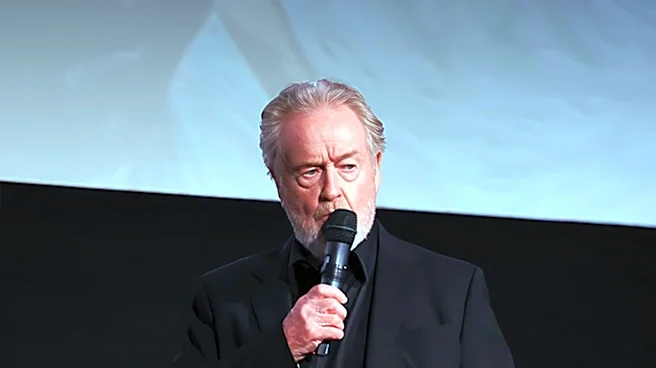
Ridley Scott, the director of the iconic 1979 film 'Alien', originally envisioned a much darker ending for the movie. In this alternate conclusion, the protagonist Ellen Ripley, played by Sigourney Weaver, would have been killed by the alien creature.
Scott's idea involved the alien decapitating Ripley and then mimicking the voice of another character to declare its victory. This proposed ending was rejected by the studio, 20th Century Fox, which threatened to fire Scott if he pursued it. Ultimately, the film concluded with Ripley surviving, which allowed for the continuation of the franchise. Scott's original concept highlights his willingness to push boundaries, though it was deemed too extreme for the studio at the time.
Why It's Important?
The decision to alter the ending of 'Alien' had significant implications for the film's legacy and the broader science fiction genre. By allowing Ripley to survive, the film set the stage for a series of sequels and established Ripley as a pioneering female action hero. This choice contributed to the film's enduring popularity and its influence on subsequent sci-fi narratives. The studio's intervention underscores the tension between creative vision and commercial considerations in filmmaking. Scott's original ending, had it been realized, might have curtailed the franchise's potential and altered the trajectory of sci-fi cinema.