



What's Happening?
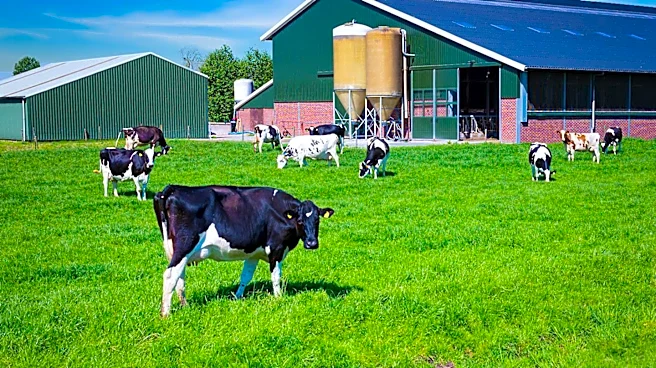
The U.S. beef industry is undergoing a significant shift with the rapid expansion of 'beef-on-dairy' production, a practice involving breeding dairy cows with beef bulls to produce calves for meat. This method has seen explosive growth, from 50,000 calves in 2014
to 3.22 million in 2024, now accounting for an estimated 26% of the feedlot population. Large-scale operations like Blackshirt Feeders in Nebraska, projected to house 200,000 animals, are predominantly sourcing beef-on-dairy cattle. This trend is emerging amidst a historic cattle shortage, pushing beef prices to record highs. While proponents argue it helps meet demand, independent ranchers and organizations like R-CALF USA view it as a significant threat to their livelihood and the traditional structure of the beef industry. The beef-on-dairy model often involves confinement from birth, raising concerns about animal welfare and health, including increased rates of congestive heart failure, lameness, and liver abscesses in these crossbred animals.
Why It's Important?
The rise of beef-on-dairy production carries profound implications for the U.S. beef industry, potentially leading to its 'vertical integration,' akin to the poultry and pork sectors. This shift could diminish the role of independent ranchers, who currently operate in an open cash market, providing them leverage against large meatpackers. If meatpackers or large feedlots gain control over the supply chain from birth, ranchers could lose their independence and bargaining power, leading to further consolidation and reduced competition. This model also raises significant animal welfare concerns, as beef-on-dairy cattle typically live in confinement and are prone to specific health issues, which could impact public perception and consumer trust in beef products. The environmental impact is also considerable, with large feedlots like Blackshirt Feeders drawing billions of gallons of water and generating massive amounts of manure, further straining resources in drought-affected regions.
What's Next?
The beef-on-dairy model is expected to continue its growth, with experts predicting a move towards a more integrated system where major players like meatpackers or large feedlots exert greater control over the supply chain. Companies like Cargill and Land O’Lakes are already investing in and promoting beef-on-dairy initiatives, indicating further industry adoption. Independent ranchers and advocacy groups like R-CALF USA will likely continue to voice opposition and seek regulatory interventions to protect traditional ranching. Consumers may increasingly encounter beef from these crossbred animals without clear labeling, potentially leading to calls for greater transparency. The long-term viability of independent ranching in the U.S. will depend on how quickly and extensively this vertical integration occurs and whether policy changes are enacted to support traditional agricultural models.
Beyond the Headlines
The expansion of beef-on-dairy production highlights a broader tension between industrial efficiency and traditional agricultural practices in the U.S. It underscores the ongoing consolidation within the food industry, where larger entities seek to control supply chains for consistency and cost efficiency, often at the expense of smaller, independent producers. This trend also brings to the forefront ethical considerations regarding animal welfare in large-scale confinement operations, potentially sparking increased scrutiny from animal rights advocates and consumers. The shift could fundamentally alter the cultural landscape of rural America, where ranching has long been a cornerstone. Furthermore, the environmental footprint of these massive feedlots, particularly concerning water usage and waste management in already stressed regions, poses long-term sustainability challenges that will require significant attention and potential policy responses.