




What's Happening?
Ency Software and Stäubli Robotics have entered into a global agreement aimed at making robot programming more intuitive, faster, and accessible. This collaboration combines Stäubli's high-performance industrial robots with Ency Software's CAD/CAM-based
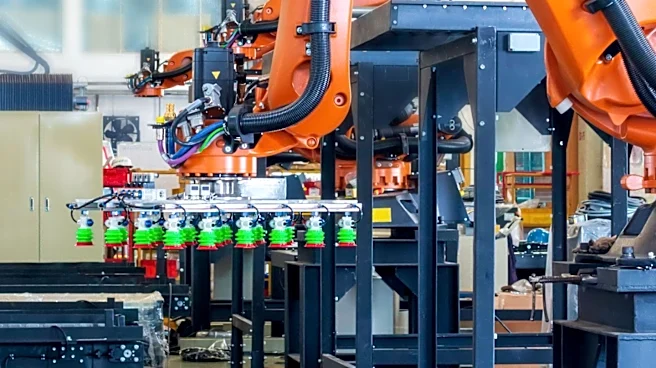
solution, Ency Robot, which facilitates offline robot programming, simulation, and trajectory generation. The partnership addresses a significant challenge in advanced automation: converting complex CAD/CAM trajectories into reliable and easy-to-control robot processes for applications such as milling, grinding, cutting, deburring, polishing, and laser processing. According to Andrei Kharatsidi, CEO of Ency Software, the goal is to provide manufacturers with a straightforward path from digital preparation to real robot motion, reducing complexity in the process. The partnership was highlighted at the Ency World Conference 2026, where discussions focused on integrating robot hardware with digital manufacturing tools.
Why It's Important?
This partnership is significant as it aims to streamline the process of robot programming, which is crucial for manufacturers looking to implement advanced automation solutions. By simplifying the programming process, manufacturers can reduce downtime and increase efficiency, leading to cost savings and improved productivity. The collaboration between Ency Software and Stäubli Robotics could potentially lower the barrier to entry for companies looking to adopt robotic solutions, thereby accelerating the adoption of automation across various industries. This development is particularly relevant in the context of increasing demand for precision and efficiency in manufacturing processes, where advanced robotics can play a pivotal role.
What's Next?
The partnership is expected to lead to further integration of digital manufacturing tools with robotic hardware, enhancing the capabilities of manufacturers to deploy advanced robotic applications. As the collaboration progresses, it may result in the development of new tools and solutions that further simplify the programming and deployment of robots. Stakeholders in the manufacturing industry, including integrators and end-users, will likely monitor the outcomes of this partnership closely, as it could influence future investments in automation technologies. Additionally, the success of this collaboration could inspire similar partnerships in the industry, fostering innovation and competition in the field of robotics.