





What's Happening?
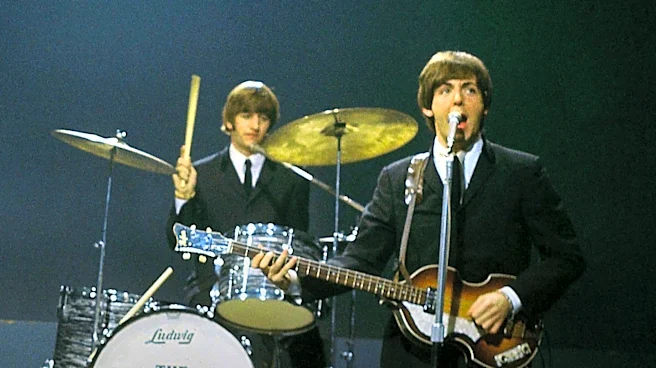
Paul McCartney, widely recognized for his bass playing, is also being acknowledged for his significant contributions as a guitarist, particularly within The Beatles. The song 'Ticket to Ride' is cited as the first Beatles record to feature McCartney on lead
guitar, showcasing a side of his musical talent that many fans might not fully realize. John Lennon even described 'Ticket to Ride' as 'one of the earliest heavy metal records made,' due to its 'lumbering groove and droning riff,' which was unusually heavy for 1965. While McCartney had previously incorporated acoustic strumming into 'I'll Follow the Sun,' his electric lead work on 'Ticket to Ride' marked a distinct and groundbreaking moment, with his guitar leads enthusiastically moving between the song's sections.
Why It's Important?
This revelation about Paul McCartney's guitar work, especially on a seminal track like 'Ticket to Ride,' is important because it broadens the understanding of his multifaceted musical genius. It challenges the common perception that he was solely a bassist, highlighting his versatility and instrumental prowess across different roles within The Beatles. For music history, it adds a layer of complexity to the band's creative process, showing how members often switched instruments and contributed beyond their primary roles. This insight can inspire musicians to explore different instruments and roles, demonstrating that artistic boundaries are often self-imposed. Furthermore, it underscores the innovative spirit of The Beatles, who were constantly experimenting with sound and arrangement, pushing the boundaries of popular music.
What's Next?
Further exploration into Paul McCartney's guitar contributions could lead to more detailed analyses of other Beatles tracks where he played guitar, potentially uncovering additional instances of his instrumental versatility. Musicologists and fans might delve into session recordings and archival materials to identify and appreciate his guitar work more comprehensively. This could also spark renewed interest in his solo career and work with Wings, examining how his guitar playing evolved outside of The Beatles. For contemporary musicians, McCartney's example serves as a reminder that mastering multiple instruments can significantly enhance one's creative output and contribute to a more dynamic musical landscape.
Beyond the Headlines
Beyond the technical aspects, McCartney's guitar contributions, particularly on 'Ticket to Ride,' illustrate the collaborative and experimental nature of The Beatles. The band's willingness to allow members to step into different instrumental roles fostered a creative environment where innovation thrived. This fluidity in roles was a hallmark of their success, enabling them to constantly reinvent their sound and surprise their audience. It also speaks to the idea that true artistry often involves pushing personal boundaries and embracing new challenges, rather than sticking to a predefined role. This deeper implication highlights the importance of creative freedom and collaboration in achieving groundbreaking artistic results.