




What's Happening?
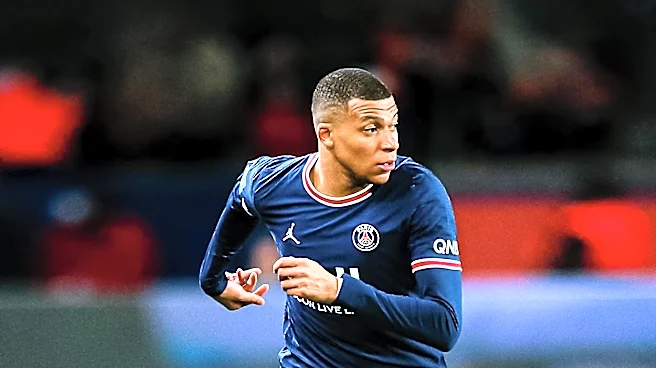
Kylian Mbappé's salary at Paris Saint-Germain (PSG) of 72 million euros gross per season, or 6 million euros monthly, remains an unparalleled record within the club, even after his departure for Real Madrid in 2024. This figure, established during his contract
extension in 2022, significantly surpasses the earnings of other prominent players who have been with PSG. For instance, Neymar's salary was 44.1 million euros gross per season, and Lionel Messi received 40.5 million euros per season. The disparity is further highlighted by a 180 million euro gross signing bonus Mbappé received in 2022, according to L'Équipe. This financial commitment underscored PSG's strategy to heavily invest in a single star player. Since Mbappé's move, PSG has shifted its salary policy, with Ousmane Dembélé now being the highest-paid player at 18 million euros gross per season, indicating a move towards a more balanced collective approach.
Why It's Important?
Mbappé's record-breaking salary at PSG highlights a significant era of hyper-individualized investment in European football, where clubs were willing to commit unprecedented financial resources to secure and retain top-tier talent. This strategy, while securing a globally recognized star, also created substantial internal salary disparities within the team. The subsequent shift in PSG's salary policy post-Mbappé's departure, moving towards a more collective and less individual-centric wage structure, could influence how other major European clubs manage their finances and player acquisitions. This change might lead to more sustainable financial models in football, potentially reducing the pressure on clubs to offer exorbitant salaries to single players. It also suggests a re-evaluation of team dynamics, prioritizing collective strength over reliance on one superstar, which could impact player recruitment and team building strategies across the sport.
What's Next?
Following Mbappé's departure and the subsequent adjustment in PSG's salary structure, the club is expected to continue its new strategic direction, focusing on a more balanced and collective team. This shift could influence future transfer market activities, with PSG potentially targeting a broader range of talented players rather than concentrating massive financial resources on one individual. The club's ability to recruit and retain talent under this new model will be closely watched, as it aims to avoid the internal imbalances that large salary disparities can create. Other European clubs may observe PSG's experience to inform their own financial and recruitment strategies, particularly concerning the long-term sustainability of investing heavily in individual superstars versus building a cohesive team with a more equitable wage structure.
Beyond the Headlines
The unprecedented salary paid to Kylian Mbappé by PSG, and the subsequent recalibration of the club's financial strategy, reflects a broader discussion within professional sports regarding player valuation, financial fair play, and team cohesion. This situation brings to light the ethical considerations of such vast sums being concentrated on individual athletes, and its potential impact on the overall integrity and competitiveness of the sport. The shift away from 'hyper-personalization' towards a more 'collective' approach by PSG could signal a cultural change in how elite football clubs perceive success—moving from a star-driven model to one that emphasizes team unity and shared responsibility. This evolution might also influence fan engagement, as supporters could increasingly value team performance and collective identity over the allure of individual superstars, potentially fostering a more community-oriented sports culture.