
What's Happening?
The 9th China International Import Expo (CIIE) recently opened in Shanghai, serving as a significant platform for global enterprises to access China's extensive market. This event, held just before the
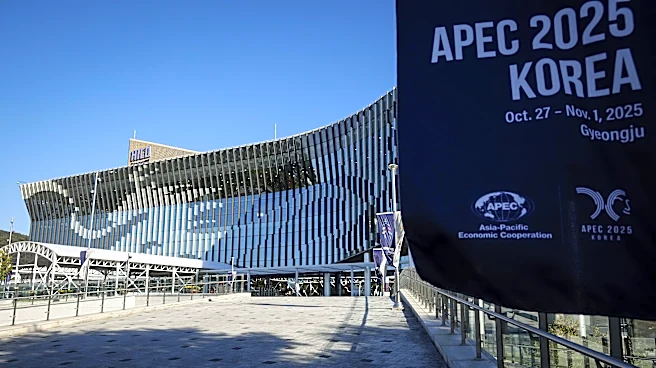
33rd Asia-Pacific Economic Cooperation (APEC) Economic Leaders' Meeting, underscores efforts to deepen regional collaboration and foster an Asia-Pacific community. The Asia-Pacific region is currently experiencing robust economic growth, solidifying its role as a primary driver of global economic expansion. Despite a global environment marked by rising unilateralism and protectionism, the increasing participation in the CIIE reflects a shared regional desire for stable development and effective cooperation channels. The expo, personally championed by Chinese President Xi Jinping, acts as a conduit for China's new development paradigm, promoting high-level opening-up and serving as an international public good. This year's event features 162 countries, regions, and international organizations, with 4,142 overseas enterprise exhibitors, and an exhibition area exceeding 440,000 square meters, demonstrating its growing appeal and vitality. U.S. enterprises notably lead in total exhibition area, with significant participation from Australia, New Zealand, South Korea, and ASEAN nations.
Why It's Important?
The CIIE's emphasis on open development and regional collaboration is crucial for U.S. businesses and the broader global economy. The strong presence of U.S. enterprises at the expo indicates their continued interest in the Chinese market and the broader Asia-Pacific region, which remains a key engine for global growth. In an era of increasing protectionist sentiments, platforms like CIIE offer vital avenues for maintaining and expanding international trade relationships. For U.S. industries, participation in such events can lead to new market opportunities, technological exchanges, and strengthened supply chains. The expo also highlights China's commitment to an open global economy, which can help stabilize international trade expectations and foster a more predictable environment for foreign investment. The introduction of cutting-edge technologies and innovations, including those from U.S. companies like Dow, demonstrates the potential for collaborative advancements and economic benefits across the region. This sustained engagement is vital for U.S. economic stakeholders seeking to leverage the dynamic growth of the Asia-Pacific.
What's Next?
Looking ahead, the CIIE is expected to continue fostering economic and trade ties, translating trade and investment liberalization into concrete business deals. The ongoing focus on innovation, digital economy, and green, low-carbon cooperation will likely shape future collaborations and industrial chain developments within the Asia-Pacific. The upcoming APEC Economic Leaders' Meeting in Shenzhen will further build on these themes, with China, as the host, prioritizing openness, innovation, and cooperation to drive digital, intelligent, and green transformations. This suggests a continued push for policies that facilitate cross-border trade, investment, and technological exchange. Stakeholders, including U.S. businesses and policymakers, will be watching for further initiatives that promote interoperability of trade systems and regulatory frameworks, especially concerning digital trade and artificial intelligence. The sustained dialogue and practical cooperation fostered by events like CIIE and APEC are critical for navigating global economic complexities and ensuring continued regional prosperity.
Beyond the Headlines
Beyond the immediate economic transactions, the CIIE and similar regional initiatives carry deeper implications for global governance and multilateralism. In a world grappling with geopolitical shifts and economic fragmentation, these platforms serve as crucial mechanisms for dialogue and consensus-building. The emphasis on an 'Asia-Pacific community' reflects a long-term vision for integrated regional development, which could influence future international norms and standards. For the U.S., understanding and engaging with this evolving regional architecture is essential for maintaining its influence and promoting its economic interests. The focus on interoperability in digital trade and AI, as discussed in APEC forums, highlights the growing importance of harmonizing diverse regulatory environments to facilitate seamless cross-border operations. This also touches upon ethical considerations related to data privacy and the responsible development of emerging technologies. The continued commitment to open markets and shared prosperity in the Asia-Pacific could set a precedent for other regions, fostering a more interconnected and cooperative global economic order.