
What's Happening?
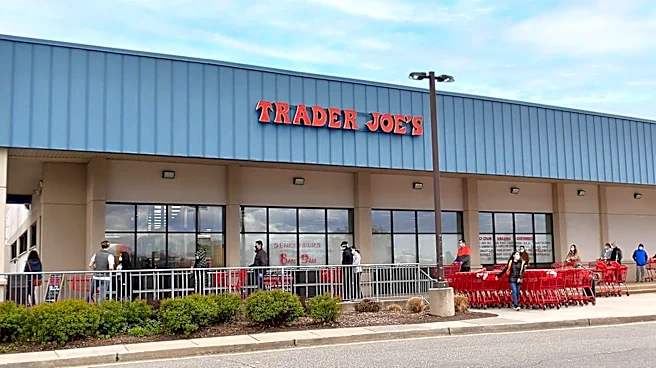
Despite Trader Joe's achieving the number one ranking in customer satisfaction in 2026, according to the American Customer Satisfaction Index, shoppers frequently encounter significant challenges due to the store's
design and operational practices. A primary issue is the small average store size, typically ranging from 10,000 to 15,000 square feet, which is considerably smaller than the average supermarket footprint of 42,272 square feet, as reported by The Food Industry Association. This limited space, often a result of adapting existing buildings like former theaters or banks, leads to cramped aisles. Compounding this, Trader Joe's stores serve approximately 5,000 customers daily while stocking only about 4,000 SKUs, far fewer than the 40,000 SKUs found in other grocery chains, according to Gitnux. This high customer volume and limited inventory necessitate frequent restocking by employees, which further contributes to aisle congestion and a stressful shopping environment, as noted by numerous customer complaints on platforms like Reddit.
Why It's Important?
The operational challenges at Trader Joe's, stemming from its unique business model, have significant implications for both customer experience and retail strategy. While the company's focus on a curated selection and private-label products contributes to its high customer satisfaction, the physical constraints of its stores can undermine this positive perception. The congestion and difficulty in navigating aisles during peak hours can lead to customer frustration, potentially impacting repeat visits and overall brand loyalty despite high satisfaction scores. For the retail industry, Trader Joe's situation highlights a trade-off between efficient space utilization and customer comfort. Its strategy of adapting smaller, existing buildings is environmentally positive but creates operational hurdles. This scenario underscores the importance of balancing unique product offerings and customer service with practical in-store logistics, especially in high-traffic retail environments. Other retailers might observe these challenges when considering similar small-format or high-density store models.
What's Next?
Trader Joe's will likely continue to face the challenge of managing customer flow and in-store congestion as its popularity persists. Given its established business model and real estate strategy of adapting existing structures, a significant expansion of store footprints across its chain seems improbable in the short term. The company may explore alternative solutions to mitigate congestion, such as optimizing stocking schedules to off-peak hours, refining store layouts to improve traffic flow, or implementing technology to manage customer density. However, these measures might only offer partial relief. Customer feedback, particularly through online forums, will continue to highlight these issues, potentially pressuring the company to innovate within its existing operational framework to enhance the in-store experience without compromising its core identity or product accessibility. The ongoing balance between maintaining its unique shopping atmosphere and addressing practical inconveniences will be a key focus.
Beyond the Headlines
The situation at Trader Joe's reflects a broader trend in retail where unique shopping experiences are highly valued but can come with operational trade-offs. The company's success, despite its physical limitations, suggests that consumers are willing to overlook certain inconveniences for perceived value, quality, and a distinct brand identity. This phenomenon raises questions about the evolving priorities of modern consumers, who might prioritize product curation and brand ethos over traditional retail comforts like spacious aisles. Ethically, the constant presence of employees restocking shelves amidst heavy customer traffic could also raise concerns about employee working conditions and efficiency, as they navigate crowded spaces to perform their duties. Legally, while no direct issues are apparent, persistent customer complaints about safety or accessibility due to congestion could eventually draw attention. Culturally, Trader Joe's has cultivated a loyal following, almost a community, which might be part of why customers tolerate the crowded conditions, viewing it as part of the 'Trader Joe's experience' rather than a flaw.