






What's Happening?
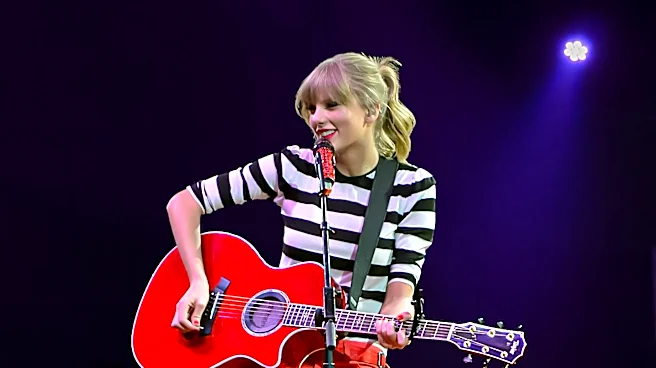
Actor, author, and Christian evangelist Kirk Cameron has voiced concerns regarding Taylor Swift's significant cultural influence, suggesting that she is 'discipling' millions of young fans beyond mere entertainment. During a recent podcast episode, Cameron acknowledged
Swift's talent and success but questioned certain messages present in her music and performances. He stated that when a celebrity influences millions, they are shaping young people's beliefs about what is 'good,' 'true,' 'normal,' and 'desirable.' Cameron specifically mentioned themes in some of Swift's work that he believes include 'sexual immorality, vulgarity, ideas of revenge, drunkenness, bitterness and rebellion against biblical morality.' He clarified that not every song contains these messages but emphasized their power when combined with catchy music, elaborate concerts, and Swift's global star status. Cameron highlighted that culture often imparts values subtly, using a song rather than a textbook to convey ideas about topics like sex. His comments come as Swift continues to achieve historic career milestones, including her induction into the Nashville Songwriters Hall of Fame and her record-breaking Eras Tour.
Why It's Important?
Cameron's remarks underscore a broader discussion about the role of celebrity influence in shaping societal values, particularly among younger generations. His perspective highlights the potential for popular culture, exemplified by artists like Taylor Swift, to act as a powerful, albeit indirect, moral and ethical educator. This raises questions for parents, educators, and religious leaders about how to navigate the messages young people receive from media. The debate touches on the responsibility of public figures with immense platforms and the impact of their artistic expressions on impressionable audiences. For the entertainment industry, it brings to the forefront the ongoing tension between artistic freedom and perceived social responsibility. The discussion also reflects differing views within American society regarding what constitutes appropriate content for young audiences and the extent to which cultural figures should be held accountable for the implicit lessons their work conveys. This conversation is significant as it delves into the intersection of faith, popular culture, and youth development in the U.S.
What's Next?
While Cameron's comments are unlikely to directly alter Taylor Swift's career trajectory or artistic output, they may fuel ongoing discussions within religious communities and among parents about media consumption and celebrity influence. It could lead to increased scrutiny of popular music lyrics and themes by certain groups, potentially prompting more dialogue within families about the values presented in entertainment. Cameron's call for prayer for Swift suggests a desire for a spiritual transformation rather than a direct confrontation, indicating that his focus is on influencing her personal direction rather than instigating a boycott or public campaign against her. Other public figures, particularly those with similar faith-based platforms, might echo or expand upon Cameron's sentiments, contributing to a broader cultural conversation about the impact of pop stars. The entertainment industry may continue to navigate these critiques by emphasizing artistic expression and audience interpretation, while some artists might become more conscious of the messages they convey, or conversely, double down on their creative freedom.
Beyond the Headlines
Cameron's critique extends beyond a simple judgment of Taylor Swift's music; it delves into the concept of 'discipleship' through cultural means, suggesting that entertainment can function as a form of moral instruction. This perspective highlights a long-standing concern within religious and conservative circles about the secularization of culture and the perceived erosion of traditional values. It also touches on the power dynamics between creators and consumers, where the artist's vision can inadvertently or intentionally shape the worldview of their audience. The discussion implicitly raises questions about media literacy and critical thinking skills among young people, and the role of parents in mediating cultural influences. Furthermore, it reflects a broader cultural tension in the U.S. between artistic expression, individual liberty, and community standards, particularly when it comes to content consumed by minors. This ongoing dialogue underscores the complex relationship between faith, fame, and the formation of identity in a highly mediated society.