
What's Happening?
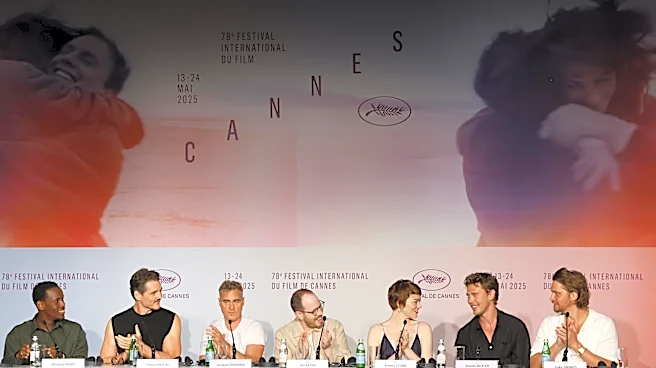
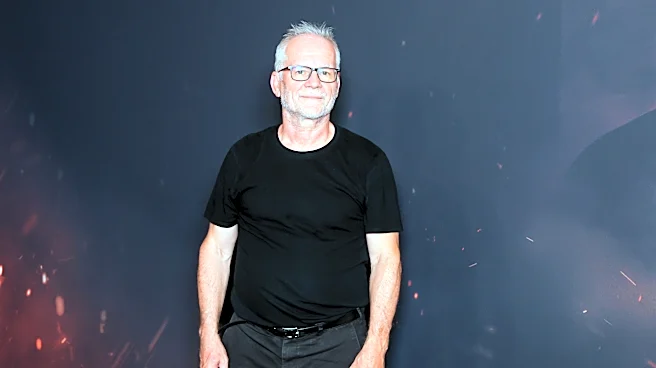
The 23rd Seville European Film Festival (SeFF), held from November 6-14 in Spain, honored Cannes Film Festival director Thierry Fremaux and Polish filmmaker Agnieszka Holland with the Giraldillo de Honor
lifetime achievement award. Both figures emphasized the importance of preserving film history and the theatrical experience during press conferences. Fremaux highlighted initiatives like the Cannes Classics section and the International Classic Film Market at the Lyon-based Lumière Institute, where he also serves as director. Holland discussed the role of streaming services as important libraries but cautioned against algorithms dictating content selection, advocating for quality over manipulation of distribution. The festival also announced its awards, with Romanian Florin Serban’s 'You Don’t Belong Here' winning the top prize for best film.
Why It's Important?
The recognition of Thierry Fremaux and Agnieszka Holland at the Seville Film Festival underscores the critical role of film festivals in shaping global cinema and preserving its heritage. For the U.S. film industry, the increasing pipeline from Cannes to the Oscars, as noted by Fremaux, signifies the growing influence of international festivals on American awards season and market trends. This trend means that U.S. filmmakers and distributors are increasingly looking to Cannes and other major festivals for early recognition and momentum. The discussions by Fremaux and Holland about preserving the theatrical experience versus streaming services are highly relevant to the ongoing debate within the U.S. entertainment sector, as studios and exhibitors grapple with evolving audience habits and distribution models. Their advocacy for quality content and historical preservation resonates with efforts to maintain the artistic integrity and cultural significance of cinema.
What's Next?
The discussions at the Seville Film Festival regarding the preservation of cinematic history and the theatrical experience are likely to continue influencing industry dialogues. As Cannes increasingly serves as a launchpad for Oscar contenders, the selection process at such festivals will attract heightened industry attention, potentially impacting film acquisition and marketing strategies for U.S. distributors. The ongoing debate about streaming versus theatrical releases, as highlighted by Holland, will continue to shape business models and content strategies for major U.S. media companies. Festivals like Seville will remain crucial platforms for showcasing international talent and fostering critical conversations about the future of cinema, influencing global film trends and potentially leading to new collaborations and distribution agreements.
Beyond the Headlines
The honoring of Fremaux and Holland at SeFF delves into the deeper philosophical questions surrounding the art of cinema in the digital age. Fremaux's assertion that 'no film is older than a work by Shakespeare or Mozart' challenges the perception of 'old movies' and advocates for actively bringing cinematic history into the present. This perspective is vital for film education and cultural literacy, encouraging audiences to engage with the rich legacy of film. Holland's nuanced view on streaming services—acknowledging their library function while critiquing algorithmic content selection—raises ethical concerns about curation and audience autonomy. This conversation is particularly pertinent in the U.S., where streaming platforms dominate, and the balance between accessibility, artistic integrity, and commercial interests is constantly being negotiated. The festival's role in fostering such critical dialogue is essential for the long-term health and evolution of global cinema.