








What's Happening?
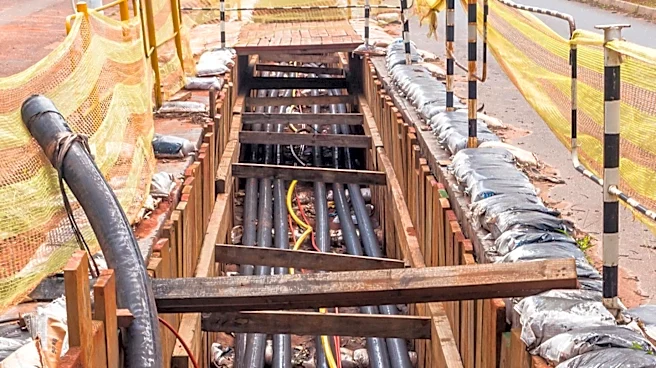
Eversource's controversial plan to construct a 5.3-mile, 16-inch diameter gas pipeline between Longmeadow and Springfield, Massachusetts, remains stalled as the company has yet to file a required supplemental report. Three years ago, State Energy Secretary
Rebecca L. Tepper deemed Eversource's initial draft environmental impact statement non-compliant with the Massachusetts Environmental Policy Act (MEPA) and mandated a detailed supplemental report justifying the project's necessity. The project, intended to serve as a backup for an existing gas line, has faced significant opposition from climate activists and local officials. Although Eversource had previously indicated a filing by the end of 2025, the company now estimates submission by the end of 2026. The project's cost has escalated from $65 million to an estimated $85 million, which would be borne by ratepayers. Local officials, including Longmeadow Select Board Chair Dan Zwirko and Springfield City Solicitor Stephen Buoniconti, confirm no progress has been made, and the project is still awaiting Eversource's report.
Why It's Important?
This ongoing delay is significant for several reasons, impacting both local communities and broader energy policy discussions. For residents of Springfield and Longmeadow, particularly those in environmental justice communities, the project raises concerns about health and safety, given Springfield's high asthma rates and the potential environmental impact of new gas infrastructure. The increased cost, now estimated at $85 million, directly affects Massachusetts ratepayers, who would ultimately fund the project. This situation highlights the tension between energy infrastructure development and environmental protection, especially in areas designated as environmental justice communities. The legislative efforts by Sen. Adam Gomez and Rep. Bud Williams to prevent new gas facilities near such communities underscore the political and social importance of this issue. The project's limbo also reflects the growing scrutiny of fossil fuel infrastructure in the context of climate change goals and the transition to renewable energy sources.
What's Next?
Eversource is expected to submit its supplemental Draft Environmental Impact Report (SDEIR) by the end of 2026, which will restart the regulatory process. Once filed, the report will undergo review by the state, and public hearings, including at least one in-person meeting in Springfield, will be required as per Secretary Tepper's 2023 decision. The project will also need additional approvals from the Energy Facilities Siting Board, where a hearing officer has yet to be assigned to the open case. Local officials and climate activists will continue to monitor the situation closely, with groups like the Springfield Climate Justice Coalition and Climate Action Now maintaining pressure on Eversource. The legislative proposals by Sen. Adam Gomez and Rep. Bud Williams, supported by Sen. Jake Oliveira, could also influence the future of such projects by imposing stricter conditions on gas infrastructure development near environmental justice communities. The outcome of this project could set a precedent for similar energy infrastructure proposals in Massachusetts.
Beyond the Headlines
The Eversource pipeline project's protracted delay and the strong community opposition it faces reveal deeper societal and ethical considerations regarding energy development. The rising cost, borne by ratepayers, highlights the economic burden of traditional energy infrastructure and questions the long-term financial viability of such projects in an era of increasing climate awareness. The focus on environmental justice communities brings to light the disproportionate impact of industrial development on vulnerable populations, raising ethical questions about equitable distribution of environmental risks. This case exemplifies the broader struggle between corporate interests in maintaining existing energy systems and public demand for cleaner, more sustainable alternatives. It also underscores the power of local activism and state-level environmental regulations in challenging large utility companies. The debate extends beyond a single pipeline to the fundamental question of Massachusetts's energy future and its commitment to climate goals, influencing policy decisions on energy affordability, infrastructure investment, and environmental justice.