








What's Happening?
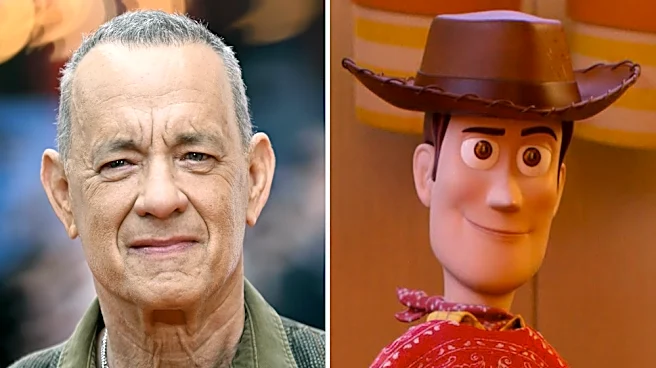
Tom Hanks has expressed uncertainty about reprising his role as Woody in a potential Toy Story 6, emphasizing that any new installment must be 'worthwhile' and 'great.' In an interview, Hanks acknowledged that Disney could potentially use technology or AI
to incorporate his past performances as Woody, allowing his character to appear in future films without his direct involvement. This comes as Toy Story 5 has seen significant box office success, suggesting that a continuation of the franchise is likely. Hanks stressed the importance of a fresh and meaningful story, rather than producing a sequel solely for commercial reasons. While Disney owns the rights to Hanks' past work as Woody, the actor's comments highlight the evolving role of technology in film production and the potential for AI to extend the life of beloved characters.
Why It's Important?
The discussion around using AI to recreate Tom Hanks' voice for future Toy Story films underscores a broader trend in the entertainment industry where technology is increasingly used to extend the life of franchises. This raises questions about the role of actors in future productions and the ethical implications of using AI to replicate performances. For Disney, the ability to continue the Toy Story franchise without the original cast could be financially beneficial, but it also risks alienating fans who value the authenticity of the original performances. The potential use of AI in this context highlights the tension between technological innovation and artistic integrity, as well as the need for clear guidelines on the use of AI in creative industries.
What's Next?
While Toy Story 6 has not been officially announced, the success of Toy Story 5 suggests that Disney may pursue another sequel. If Disney decides to move forward with Toy Story 6, it will need to consider how to balance technological advancements with the expectations of fans and the creative vision of the franchise. The company may also face pressure to address the ethical considerations of using AI to replicate performances, potentially leading to industry-wide discussions about the future of AI in film. As the entertainment industry continues to evolve, stakeholders will need to navigate these challenges to ensure that technological innovations enhance rather than detract from the storytelling experience.