



What's Happening?
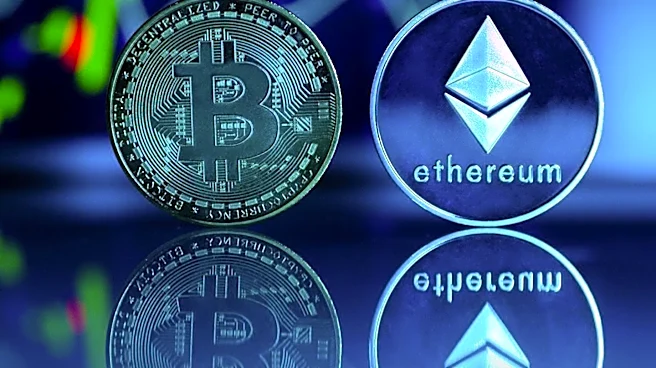
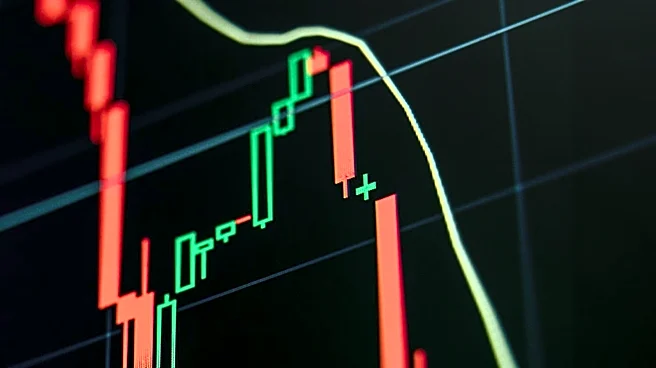
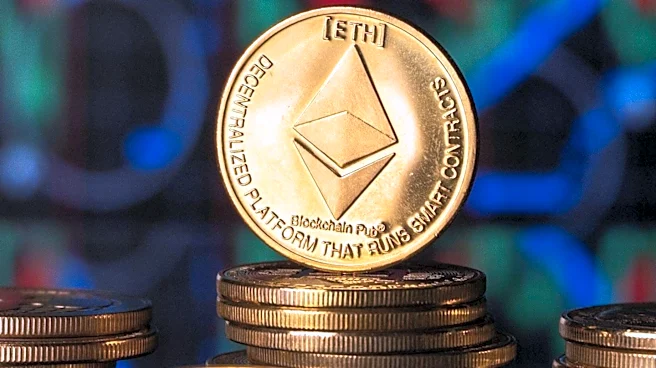
Ether (ETH), the cryptocurrency of the Ethereum network, experienced a notable price decline on Sunday evening, November 8, 2026, falling to $2,120. This represents an almost 5% decrease from 24 hours prior, according to CoinGecko. The 24-hour high for
Ether was $2,242.93, with a low of $2,063.29 on the OKX exchange, marking an 8.0% drop from its peak. This downturn was largely attributed to a wave of forced selling of leveraged long positions in the derivatives market. Within one hour, approximately $745 million worth of positions were forcibly closed, with about 96% of these being bets on rising prices. Over a 24-hour period, Ether accounted for $343 million in liquidations, significantly more than Bitcoin's $229 million, despite Bitcoin's larger market capitalization. Additionally, US Ether ETFs saw outflows of around $93 million on Friday, contributing to the selling pressure. This marks the seventh consecutive week of outflows for US spot Ether ETFs, with a net outflow of $365 million in the preceding week.
Why It's Important?
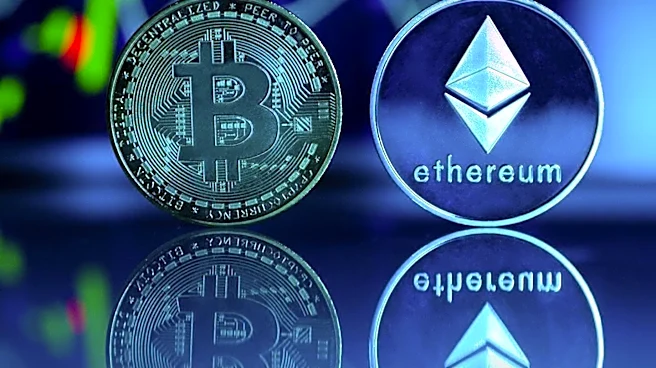
The recent price drop and significant liquidations in the Ether market highlight the volatility and interconnectedness of cryptocurrency derivatives and spot markets. The disproportionate impact on Ether compared to Bitcoin, despite Bitcoin's larger market value, indicates a specific vulnerability in Ether's market positioning, particularly due to concentrated leveraged long positions. The continuous outflows from US spot Ether ETFs for seven consecutive weeks signal a waning institutional interest or a shift in investor sentiment, which removes a crucial source of buying pressure. This lack of fresh capital from funds makes the market more susceptible to sharp declines triggered by liquidations. For investors, this event underscores the amplified risks associated with leveraged trading, where even moderate price movements can lead to substantial losses through forced closures. The ETH/BTC ratio also fell to 0.0286, indicating Ether's underperformance relative to Bitcoin, which could lead to portfolio rebalancing among holders of both assets.
What's Next?
The immediate future for Ether will likely involve monitoring key price levels, with $2,063 serving as a critical support level, representing the low point reached during the recent sell-off. A sustained recovery above the 24-hour high of $2,243 would be necessary to signal a potential rebound, but market analysts suggest that such a recovery would only have substance if US Ether ETFs begin to report inflows again. Without renewed fund money, the market remains vulnerable. The current trend of Ether supply growing faster than it is burned, coupled with falling ETF inflows, suggests continued headwinds. Traders will be watching for any signs of renewed institutional interest or a shift in the balance between issuance and burning of Ether. The market may also see a deleveraging effect as fewer leveraged positions remain, potentially reducing immediate selling pressure from forced liquidations, but the underlying lack of demand from funds remains a concern.
Beyond the Headlines
This event underscores broader themes within the cryptocurrency market, particularly the impact of derivatives on spot prices and the evolving role of institutional investment vehicles like ETFs. The cascade of liquidations highlights the systemic risk inherent in highly leveraged markets, where a single price trigger can lead to a rapid and amplified downturn. The sustained outflows from Ether ETFs could indicate a longer-term shift in how institutional investors perceive Ether's value proposition or broader concerns about the regulatory environment for digital assets. Furthermore, the comparison between Bitcoin and Ether's market dynamics reveals differing investor behaviors and market structures. Bitcoin, with its capped supply and established narrative as 'digital gold,' often exhibits different volatility patterns than Ether, which functions as the fuel for a decentralized application platform. The ongoing debate about Ether's uncapped supply and its issuance/burn mechanism will continue to influence its long-term valuation and investor confidence, especially in periods of market stress.