







What's Happening?
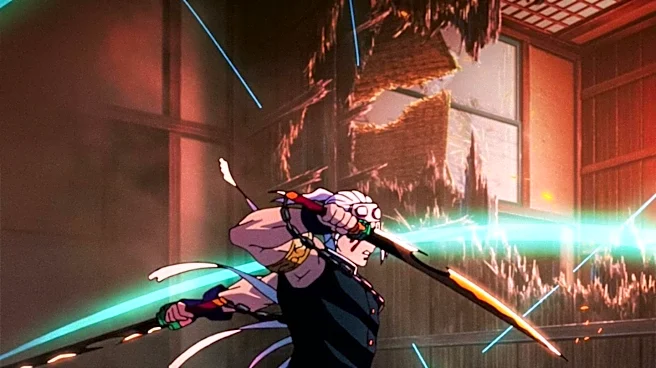
The latest adaptation of 'Ghost in the Shell' by studio Science Saru has been released, marking a significant update to the classic manga originally created by Masamune Shirow in 1989. This new version, which premiered at the Annecy Animation Film Festival,
is noted for its vibrant hand-drawn animation and creative use of 3D elements. The series explores themes of identity, technology, and humanity, staying true to the original's cyberpunk roots. The adaptation is praised for its balance of humor and deep philosophical themes, offering a fresh perspective while maintaining the essence of the original story. The show is set in a world where technology blurs the line between human and machine, featuring cyberbrains and prostheses that transform individuals into cyborgs.
Why It's Important?
This adaptation is significant as it revitalizes a beloved franchise with a new artistic approach that appeals to both long-time fans and newcomers. By incorporating humor and a retro aesthetic, the series distinguishes itself from previous adaptations, potentially attracting a broader audience. The show's exploration of themes like AI and human-machine integration is timely, reflecting current societal debates about technology's role in our lives. This could influence discussions in the U.S. about the ethical implications of technological advancements and their impact on human identity and employment.
What's Next?
As the series continues, it is likely to delve deeper into its philosophical themes, potentially sparking further interest and discussion among viewers. The adaptation's success could lead to more projects that explore similar themes, influencing the direction of future anime and science fiction narratives. Additionally, the show's reception may impact the production of other adaptations, encouraging studios to experiment with blending traditional and modern animation techniques.
Beyond the Headlines
The adaptation's focus on AI and technology raises questions about the future of human identity and the potential consequences of technological integration. It also touches on issues of exploitation and political commentary, which may resonate with audiences concerned about global and domestic policies. The series' retro aesthetic, featuring outdated technology, serves as a commentary on the rapid pace of technological change and its impact on society.