


What's Happening?
Peter Nagy, the US-born gallerist and artist who significantly influenced Indian contemporary art, has passed away at the age of 67 after a long illness. Nature Morte, the gallery he founded with locations in Delhi and Mumbai, confirmed his death on social
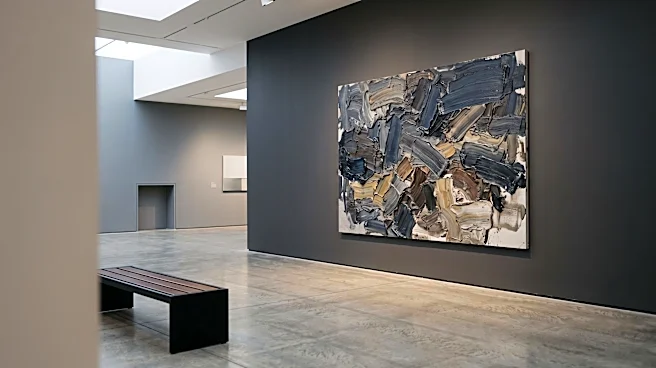
media on October 13. Nagy emerged as an artist in the 1980s East Village scene in New York, where his work embraced neo-conceptualism, post-minimalism, and institutional critique, often ironically adopting Pop Art aesthetics to comment on consumerism and digital image culture. After co-founding Nature Morte in New York in 1982 with artist Alan Belcher, he later moved to New Delhi and re-established the gallery in 1997 as a commercial venture focused on contemporary South Asian art. He is credited with introducing the New York gallery model to India and played a pivotal role in launching the careers of prominent Indian artists.
Why It's Important?
Peter Nagy's passing marks the end of an era for Indian contemporary art, where he was a transformative figure. His unique perspective as an outsider, combined with his experimental taste, allowed him to identify and champion South Asian artists whose work resonated on a global scale. By bringing the New York gallery model to India, he professionalized and expanded the market for contemporary art in the region, fostering a new generation of artists and collectors. His gallery, Nature Morte, became a crucial platform for artists like Jitish Kallat, Raqs Media Collective, and Bharti Kher, who are now internationally recognized. Nagy's influence extended beyond sales, as he also brought major international artists like Alicja Kwade and Ai Weiwei to exhibit in India, further integrating the Indian art scene into the global dialogue. His legacy is one of profound impact on the development and recognition of South Asian contemporary art.
What's Next?
Nature Morte gallery will continue its operations in Delhi and Mumbai, honoring Peter Nagy's wishes that the gallery should not close in mourning. The gallery's ongoing participation in international art fairs, such as Frieze London, indicates its commitment to maintaining its presence in the global art market. The current exhibition schedule will proceed as planned, reflecting Nagy's belief that an artist's moment should not be put on hold. The art world will likely continue to reflect on Nagy's contributions and the lasting impact he had on shaping the landscape of contemporary art, particularly in South Asia. His vision for experimental and peripatetic programming will likely continue to guide the gallery's future direction, ensuring his influence endures through the artists he championed and the institutions he helped build.
Beyond the Headlines
Peter Nagy's career exemplifies the power of cross-cultural exchange in the arts and the role of individual visionaries in shaping artistic movements. His journey from the East Village art scene to becoming a central figure in Indian contemporary art highlights how diverse influences can converge to create something entirely new. His approach, which blended neo-conceptualism with an ironic embrace of Pop Art aesthetics, challenged conventional notions of art and commerce. Furthermore, his decision to establish a gallery in India, a market then less recognized internationally, demonstrates a foresight that not only elevated local artists but also broadened the global understanding of contemporary art beyond Western centers. His legacy is not just about the artists he promoted, but also about the institutional framework he helped establish, which continues to support and showcase South Asian artistic talent on a global stage, fostering a more inclusive and diverse art world.