







What's Happening?
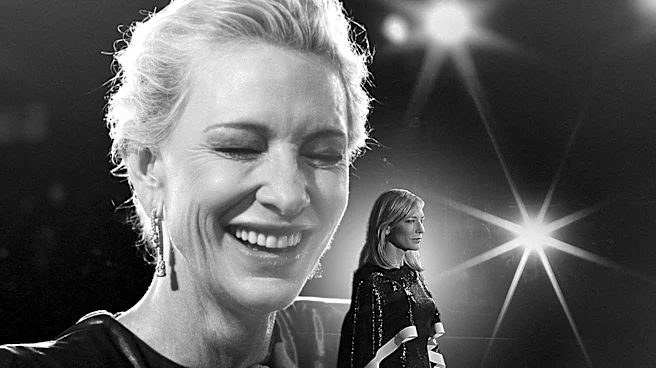
Actress Cate Blanchett has publicly asked audience members attending her London play, 'Electra/Persona,' to refrain from filming the performance. Following a curtain call at the National Theatre’s Lyttelton Theatre, Blanchett addressed the audience, emphasizing
the importance of being present and together in the theater. She acknowledged that filming the curtain call might be seen as flattering but stressed that recording the show itself detracts from the experience for subsequent audiences. The play, which combines Sophocles' tragedy 'Electra' with Ingmar Bergman's 'Persona,' features Blanchett and Nina Hoss alternating roles nightly. Blanchett's appeal, delivered calmly and sincerely while still in costume, has been widely shared across social media platforms, highlighting a growing concern within live theater regarding audience conduct and the use of mobile devices during performances. The production is scheduled to run through October 10.
Why It's Important?
This incident underscores a broader discussion within the performing arts community about audience etiquette and the impact of technology on live experiences. Blanchett's request highlights the value of shared, unmediated presence in a theatrical setting, a concept increasingly challenged by the pervasive use of smartphones. For the U.S. theater industry, this situation resonates as venues and performers grapple with similar issues, seeking to preserve the unique atmosphere of live performance. The widespread sharing of Blanchett's message on social media could influence audience behavior and prompt theaters to reinforce or re-evaluate their policies on recording. It also brings attention to the delicate balance between an artist's desire for an engaged audience and the public's inclination to document and share experiences digitally. Ultimately, this event contributes to an ongoing dialogue about how to maintain the integrity and intimacy of live art in an increasingly digital world.
What's Next?
Following Cate Blanchett's public appeal, it is likely that theaters, both in London and potentially in the U.S., may review and reinforce their policies regarding audience filming during performances. This could lead to more prominent signage, pre-show announcements, or even stricter enforcement by ushers. The viral nature of Blanchett's message on social media might also encourage a shift in audience perception, fostering greater respect for the live theater experience. Industry organizations and artist unions may use this moment to advocate for better audience education on theater etiquette. While no immediate policy changes have been announced, the incident serves as a significant talking point that could influence future guidelines and audience engagement strategies across the performing arts sector, aiming to preserve the unique, unrecorded nature of live shows.
Beyond the Headlines
Beyond the immediate issue of filming, Blanchett's statement touches upon the deeper cultural implications of constant digital documentation. Her emphasis on 'being together and being present' speaks to a growing concern about the erosion of shared, unmediated experiences in an age dominated by screens. This incident highlights a tension between the desire for personal archiving and sharing, and the collective experience of live art. Ethically, it raises questions about the 'right' to record public performances versus the artist's and fellow audience members' right to an undisturbed, immersive experience. Culturally, it reflects a broader societal shift where the act of experiencing something is often secondary to the act of documenting it. This development could spark further discussions about digital detoxing and the value of unplugging in specific social and cultural contexts, potentially influencing how future generations engage with live events.