



What's Happening?
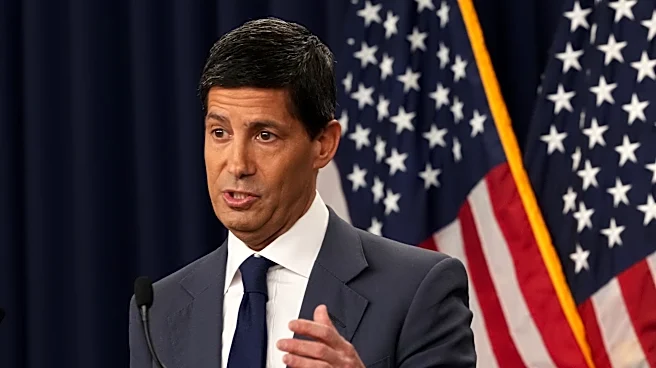
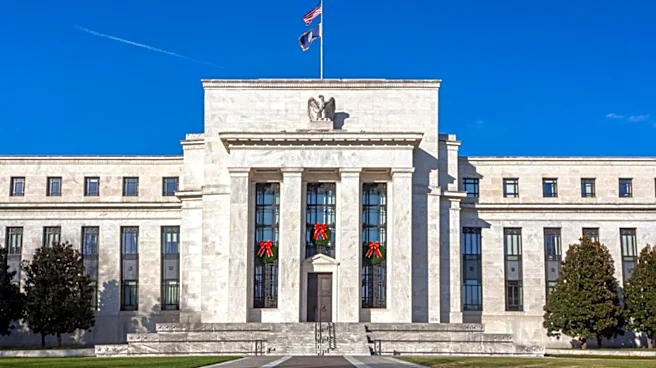
Federal Reserve Governor Lisa Cook stated on Friday that the central bank risks falling behind in its efforts to control inflation if it postpones raising interest rates. Speaking in Santiago, Chile, Cook emphasized that inflation has exceeded its target
for over five and a half years, increasing the likelihood that price and wage setters will adjust their inflation expectations upwards with each passing day. She highlighted that waiting longer to implement rate increases could lead the Fed to get "behind the curve." Cook, who dissented in October against the Fed's decision to maintain steady rates, cited persistently high inflation and accommodative financial conditions as reasons for her stance. She noted that recent inflation reports indicate brisk price increases across various categories, including airfare, appliances, furniture, hotels, and restaurants. Cook estimated that the Personal Consumption Expenditures (PCE) index, the Fed's preferred inflation measure, rose 3.8% in October, with the core PCE, excluding volatile food and energy prices, increasing by an estimated 3.2%.
Why It's Important?
Governor Cook's warning underscores a critical debate within the Federal Reserve regarding the urgency of monetary policy adjustments. Her concerns about inflation becoming entrenched in expectations could have significant implications for the U.S. economy. If inflation expectations rise, it could lead to a self-fulfilling cycle where businesses raise prices and workers demand higher wages, further fueling inflationary pressures. This scenario could necessitate more aggressive interest rate hikes in the future, potentially increasing the risk of an economic slowdown or recession. For consumers, sustained high inflation erodes purchasing power and savings, while businesses face increased costs and uncertainty. Cook's dissent and public statements signal a growing divergence of opinion among Fed officials, which could influence future policy decisions and market reactions. The perceived accommodative financial conditions, despite high inflation, suggest that current interest rates may not be sufficiently restrictive to cool the economy, posing a challenge to the Fed's dual mandate of price stability and maximum employment.
What's Next?
While Governor Cook did not provide a specific outlook for the Fed's December meeting, her remarks suggest a strong inclination towards raising interest rates. The ongoing debate within the Federal Reserve, highlighted by Cook's dissent and other officials' comments, indicates that future policy decisions will likely involve careful consideration of inflation data and economic conditions. Markets will closely watch upcoming inflation reports and statements from Fed officials for clues on the timing and magnitude of potential rate hikes. If the Fed decides to raise rates, it could lead to higher borrowing costs for consumers and businesses, impacting everything from mortgages to corporate investments. Conversely, if the Fed continues to hold rates steady, it risks validating Cook's concerns about getting behind the curve, potentially leading to prolonged inflation and greater economic instability. The trajectory of energy prices and the broader geopolitical landscape will also play a role in shaping the Fed's approach to monetary policy.
Beyond the Headlines
The discussion surrounding the Federal Reserve's interest rate policy extends beyond immediate economic indicators, touching upon the central bank's credibility and its ability to manage long-term economic stability. Cook's emphasis on inflation expectations highlights a psychological dimension of economic policy, where public and business perceptions of future prices can significantly influence current economic behavior. If the public loses confidence in the Fed's ability to control inflation, it could lead to a de-anchoring of inflation expectations, making the central bank's job much harder. This situation could also have political ramifications, as sustained high inflation often leads to public dissatisfaction and pressure on policymakers. The balance between controlling inflation and avoiding an economic downturn is a delicate one, and the Fed's decisions will have lasting effects on the U.S. economic landscape, influencing investment, employment, and the overall standard of living.