







What's Happening?
SpaceX has filed an application with the U.S. Federal Communications Commission (FCC) to operate a new constellation of 100,000 'Gen3' satellites in low Earth orbit (LEO). This move is part of SpaceX's plan to expand its Starlink broadband network, which
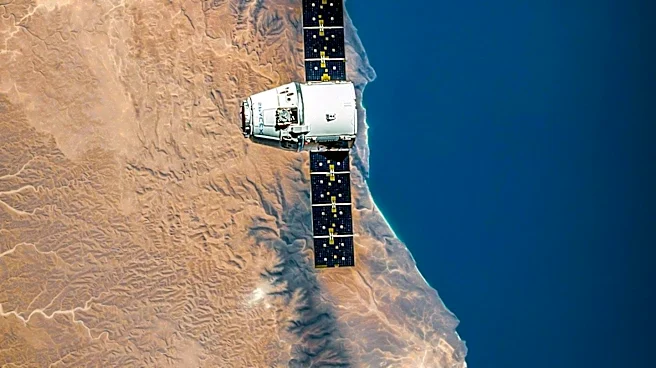
currently consists of nearly 10,800 satellites with approval for about 4,000 more. The Gen3 satellites are significantly larger than their predecessors, weighing between 4,400 to 5,500 pounds and covering an area of 3,230 to 4,300 square feet with solar arrays extended. The new satellites are expected to be launched using SpaceX's Starship, a super-heavy-lift rocket under development. This expansion aims to enhance global internet coverage and support future space missions.
Why It's Important?
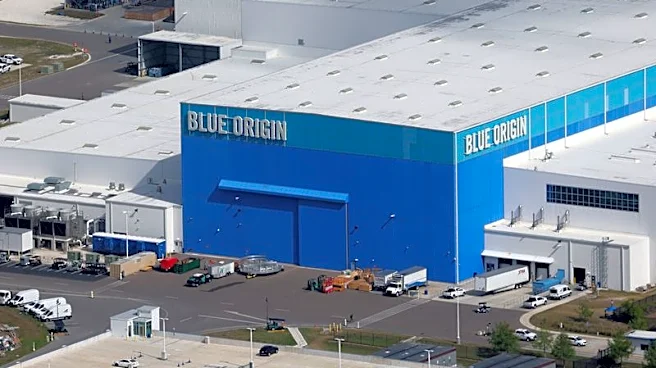
The expansion of SpaceX's Starlink network with the Gen3 satellites could significantly impact global internet accessibility, particularly in remote and underserved areas. By increasing the number of satellites, SpaceX aims to provide faster and more reliable internet services worldwide. This development also positions SpaceX as a leader in the burgeoning satellite internet industry, potentially influencing market dynamics and competitive strategies among other companies like Amazon and Blue Origin, which are also planning large satellite constellations. Additionally, the use of the Starship rocket for these launches underscores SpaceX's commitment to advancing space travel and exploration capabilities.
What's Next?
SpaceX's application is currently under review by the FCC, and its approval will be crucial for the company's plans to proceed. If approved, SpaceX will likely begin the deployment of the Gen3 satellites, further expanding its Starlink network. The success of this initiative could prompt other companies to accelerate their satellite internet projects, potentially leading to increased competition and innovation in the sector. Furthermore, the deployment of these satellites will require careful coordination to avoid space debris and ensure the sustainability of LEO operations.