










What's Happening?
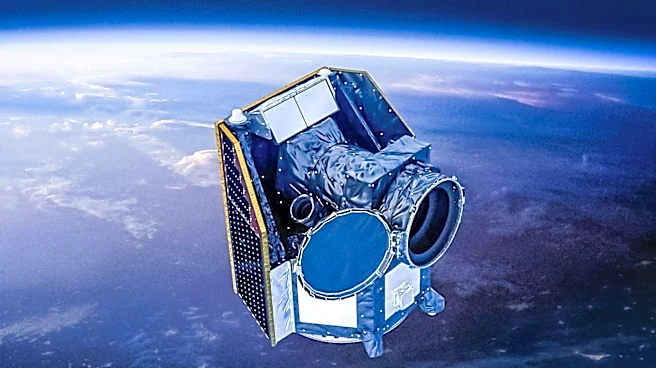
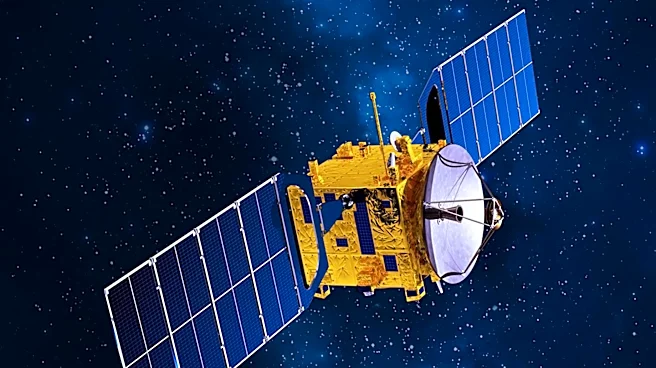
Apolink has successfully made contact with its first satellite following a launch on SpaceX's July 7 rideshare mission. This marks a significant step in demonstrating a data relay capability using an experimental license from the Federal Communications
Commission (FCC). The IPoS-TDsM cubesat is designed to receive S-band signals from partner satellites and forward them to ground stations, acting as a transparent relay layer. The mission aims to enable operators to send and receive command-and-control signals without waiting for a ground pass. Singapore-based NuSpace is the primary partner for this demonstration, utilizing its connectivity satellites launched in May.
Why It's Important?
This development represents a breakthrough in satellite communication technology, potentially transforming how data is relayed in space. By enabling real-time data transmission without reliance on ground passes, Apolink's technology could enhance the efficiency and responsiveness of satellite operations. This capability is particularly valuable for industries relying on timely data, such as telecommunications and Earth observation. The successful demonstration of this technology could lead to broader adoption and integration into satellite networks, improving global connectivity and data management.
What's Next?
Apolink plans to continue testing its technology with additional partner satellites, aiming to establish a network of 32 interconnected satellites for comprehensive data relay. The company is also collaborating with other startups to enhance its in-orbit capabilities. As the technology matures, it could see widespread application across various sectors, driving innovation in satellite communication and data services. The success of this mission may attract further investment and partnerships, accelerating the development of next-generation satellite networks.