

What's Happening?
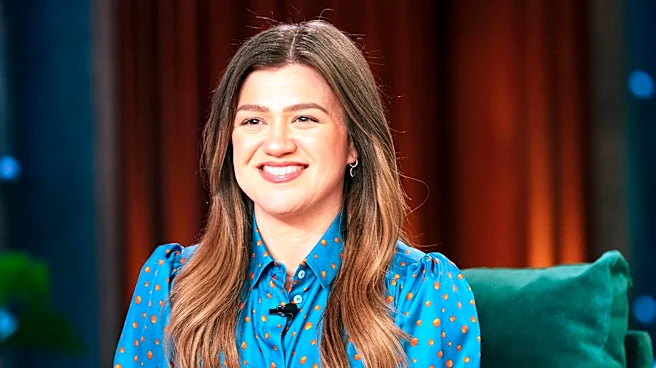
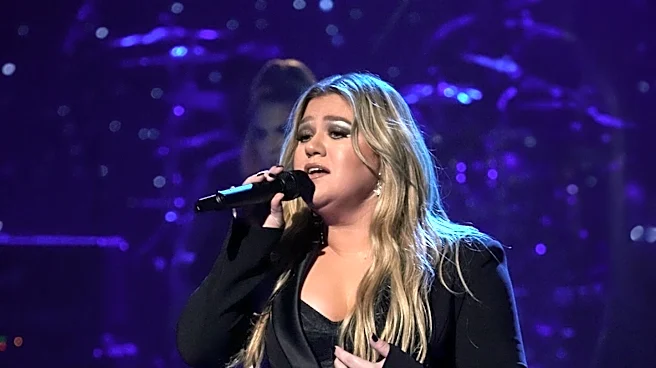
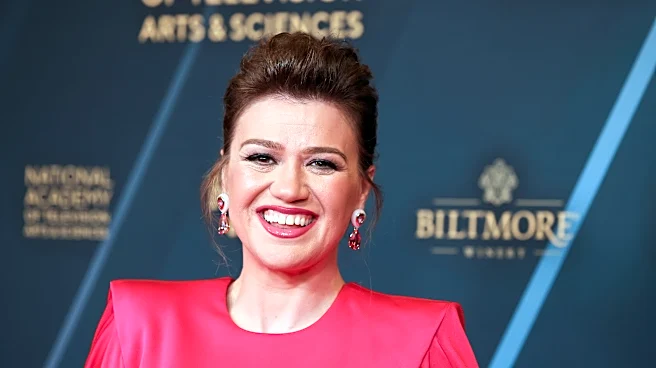
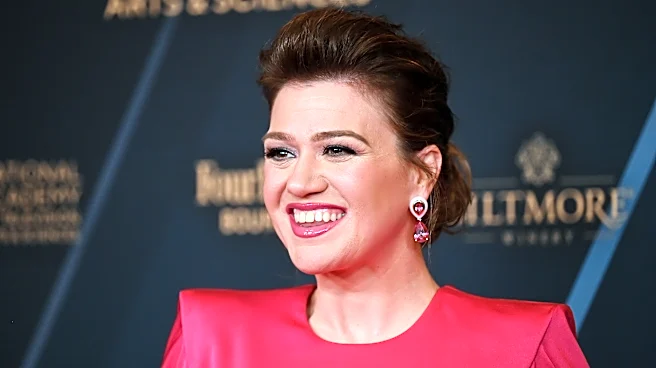
Pop singer Kelly Clarkson has publicly expressed her strong support for artificial intelligence (AI) in the music industry, advocating for the creation of separate music charts for human and AI-generated music. Appearing on the Las Culturistas podcast,
Clarkson stated her belief that while AI offers creative and interesting possibilities, AI artists should not compete directly with human artists on the same charts. She emphasized that she is 'obsessed' with AI's artistic potential and sees it as a 'fun field to play in,' particularly for individuals who may lack certain musical abilities. However, she draws a clear line when it comes to rewarding AI creations in the same manner as human endeavors. This stance places her among artists like Boy George and Charlie Puth, who hold pro-AI views, contrasting with others such as Paul McCartney and SZA, who are more critical of AI's integration into art. Clarkson also revealed her personal use of AI, specifically ChatGPT, for interior design projects.
Why It's Important?
Kelly Clarkson's advocacy for separate AI music charts highlights a growing and significant debate within the U.S. music industry regarding the role and impact of artificial intelligence. This discussion is crucial as AI technology rapidly advances, posing questions about intellectual property, artistic authenticity, and fair competition. If adopted, a dual-chart system could fundamentally alter how music success is measured and perceived, potentially creating a new segment within the industry dedicated solely to AI-generated content. This could benefit technology companies and AI developers by legitimizing their creative outputs, while also providing a clearer distinction for consumers and traditional artists. Conversely, it could also lead to further complexities in copyright law and revenue distribution, as the lines between human and machine creativity become increasingly blurred. The debate reflects broader societal concerns about AI's influence across various creative fields and its potential to disrupt established norms and economic models.
What's Next?
The conversation initiated by Kelly Clarkson and other artists is likely to intensify, prompting further discussions among music industry executives, artists, and policymakers. It could lead to formal proposals for new charting methodologies or industry standards for AI-generated music. Record labels and streaming platforms may need to consider how to categorize and promote AI content, potentially developing new algorithms or curation strategies. Legal frameworks surrounding AI-generated content, particularly concerning ownership and royalties, will also likely be re-evaluated and potentially revised. The ongoing debate could also spur more artists to take a public stance on AI, further polarizing or unifying opinions within the creative community. Ultimately, the industry will need to navigate the integration of AI while striving to maintain fairness and support for human artistry, potentially leading to new collaborative models or regulatory measures.
Beyond the Headlines
The debate over AI in music, as exemplified by Kelly Clarkson's comments, touches upon profound ethical and philosophical questions about the nature of creativity and art. It challenges the traditional understanding of authorship and the value placed on human ingenuity. If AI-generated music gains significant traction and commercial success, it could lead to a redefinition of what constitutes 'art' and who is considered an 'artist.' This shift could have long-term cultural implications, influencing how future generations perceive and create music. Furthermore, the economic impact extends beyond artists to songwriters, producers, and session musicians, whose livelihoods could be affected by the proliferation of AI tools. The discussion also highlights the broader societal challenge of integrating advanced technology into creative industries without diminishing human contribution, raising questions about the future of work and the unique role of human expression in an increasingly automated world.