











What's Happening?
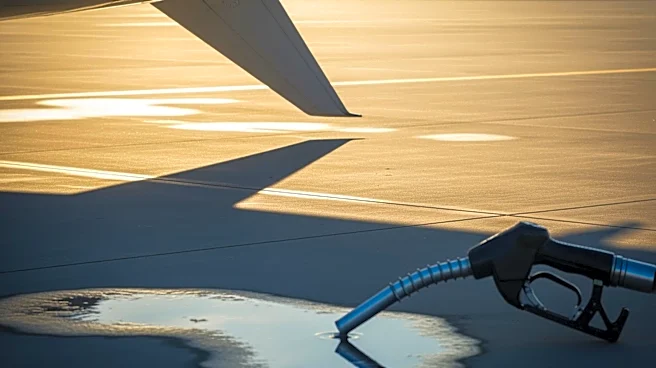
Airline ticket prices in the U.S. remain elevated despite a significant drop in jet fuel costs following an interim U.S.-Iran peace deal. The decline in fuel prices, which could save the U.S. airline industry over $40 billion annually, has not translated
into lower fares for passengers. Airlines are using the reduced fuel costs to rebuild profit margins rather than lowering ticket prices. The limited growth in domestic seat capacity allows airlines to maintain higher fares. Industry data shows that while fuel prices have decreased, airlines have only partially offset the previous increases in fuel costs through fare hikes.
Why It's Important?
The persistence of high airline ticket prices affects consumer travel behavior and the broader travel industry. While airlines benefit from reduced fuel costs, passengers face continued financial strain from elevated fares. This situation highlights the complex dynamics between fuel costs, airline pricing strategies, and market capacity. The ability of airlines to maintain high fares despite lower fuel costs underscores their pricing power in a constrained capacity environment. The situation also reflects broader economic conditions, where consumer demand and capacity limitations play significant roles in pricing strategies.
What's Next?
Airlines are expected to continue focusing on margin recovery rather than fare reductions. The potential for fare relief depends on sustained lower fuel prices and consumer demand. Industry analysts suggest that unless there is a significant increase in capacity or a drop in demand, fares are unlikely to decrease substantially. The situation may prompt regulatory scrutiny or consumer advocacy for more competitive pricing. Airlines will need to balance profitability with consumer expectations as they navigate the evolving economic landscape.