
What's Happening?
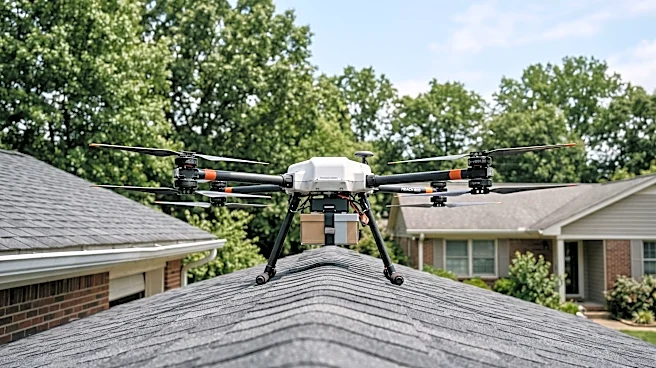
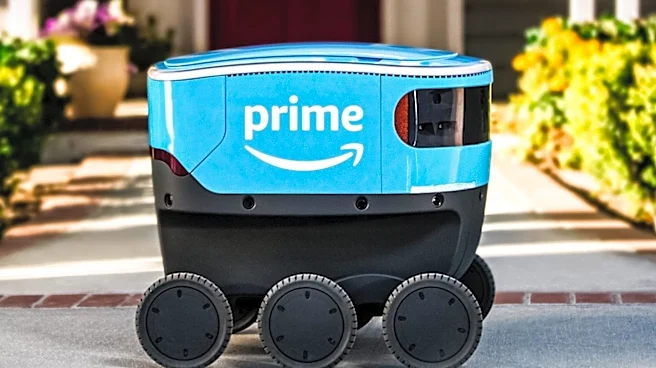
An Amazon Prime Air delivery drone crashed into a garage in Huntington Woods, Michigan, shortly after completing a delivery. The incident occurred on a Friday afternoon when the drone, after dropping off
shampoo at a neighbor's yard, struck a fiber optic cable, causing a propeller to detach. Logan Coomes, the homeowner, reported that the drone crashed through his garage roof, causing damage including flapped-up shingles. Amazon crews arrived within approximately 10 minutes to retrieve the downed drone. The Federal Aviation Administration (FAA) has initiated an investigation into the mishap, and Amazon is also conducting its own inquiry. According to Amazon, safety is a top priority, and such incidents are extremely rare, with investigations launched whenever a delivery does not proceed as planned. The drone delivery originated from one of Prime Air's facilities in Hazel Park, located about five miles from Huntington Woods.
Why It's Important?
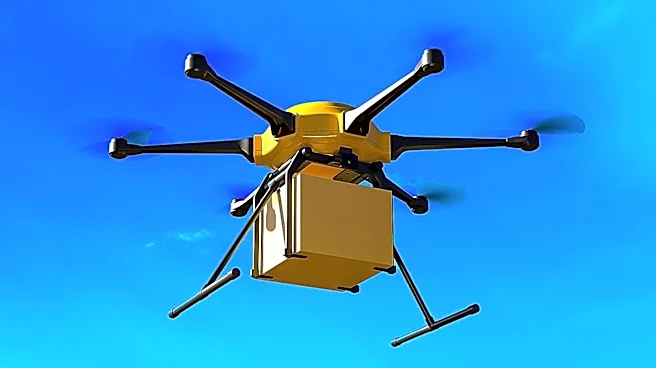
This incident highlights the ongoing challenges and risks associated with the expansion of drone delivery services in urban and suburban environments. While Amazon touts its Prime Air drones as ultrafast and convenient, capable of delivering hundreds of thousands of packages daily, this crash underscores potential safety and operational concerns. The involvement of the FAA indicates the regulatory body's close scrutiny of drone operations, especially as companies like Amazon aim for widespread autonomous deliveries. For homeowners, the incident raises questions about property damage liability and the potential for disruption. For Amazon, such events could impact public perception and trust in its drone delivery program, potentially slowing down its ambitious expansion plans to 500 municipalities by the end of 2026 and reaching half a billion customers within a decade. The incident also brings into focus the reliability of drone technology, particularly its ability to detect and avoid obstacles in complex environments.
What's Next?
Both the Federal Aviation Administration and Amazon are currently investigating the drone crash. The FAA's findings could lead to new regulations or stricter guidelines for drone delivery operations, potentially impacting Amazon's future expansion plans and the broader drone delivery industry. Amazon's internal investigation will likely focus on identifying the cause of the malfunction, whether it was a technical failure, an environmental factor, or an operational error. Depending on the outcome, Amazon may need to implement software updates, hardware modifications, or revise its flight protocols to prevent similar incidents. The company has stated it is in contact with the resident whose garage was damaged, suggesting potential compensation for repairs. This incident could also prompt increased public debate and scrutiny regarding the safety and privacy implications of widespread drone deliveries in residential areas.
Beyond the Headlines
The Michigan drone crash touches upon several deeper implications beyond immediate property damage. It brings to the forefront the ethical considerations of deploying autonomous technology in public spaces, particularly concerning unforeseen interactions with existing infrastructure like fiber optic cables. The incident also highlights the evolving legal landscape surrounding drone operations, including questions of liability for damages and the extent of regulatory oversight required for safe integration into national airspace. Culturally, such events can shape public acceptance and trust in emerging technologies. While drone delivery promises efficiency and convenience, repeated incidents, even if rare, could foster skepticism and resistance from communities. This could lead to calls for more stringent testing, transparent reporting of incidents, and greater community involvement in the planning and deployment of drone delivery services, potentially influencing the long-term trajectory of autonomous logistics in the U.S.