







What's Happening?
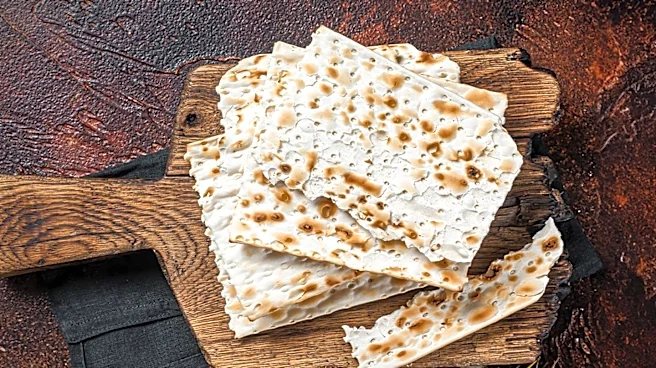
The global matzo market is projected to reach a valuation of $732.0 million by 2036, growing at a Compound Annual Growth Rate (CAGR) of 8.6% between 2026 and 2036. This expansion is driven by the repositioning of matzo beyond its traditional Passover
staple status into year-round snacking options, such as seasoned matzo chips and gluten-free crisps. In 2026, the market is estimated at $320.8 million, with classic/original matzo sheets expected to capture 37.0% of the product type demand due to their dual role in ritual compliance and everyday use. Conventional formulations are anticipated to command 45.0% of the claim segment, reflecting the efficiency of traditional wheat flour in high-speed production. North America, particularly the USA, represents a significant commercial value anchor, combining large spring Passover supermarket programs with a growing market for artisan matzo chip brands.
Why It's Important?
The growth of the matzo market signifies a broader trend in the U.S. food industry towards diversifying traditional ethnic and seasonal products into mainstream, year-round offerings. This shift creates new revenue streams for U.S. food manufacturers and retailers, expanding their product portfolios and appealing to a wider consumer base interested in clean-label, low-fat, and yeast-free snack alternatives. The emphasis on gluten-free and specialty matzo-style products also caters to evolving dietary preferences and health-conscious consumers, driving innovation in product formulation and packaging. For U.S. supermarkets, this means optimizing shelf space and marketing strategies to cross-merchandise matzo beyond seasonal aisles, integrating it into everyday snack and specialty food sections. This trend can lead to increased competition and investment in the U.S. bakery and snack sector, benefiting both established brands and emerging artisanal producers.
What's Next?
The matzo market is expected to continue its transformation, with producers focusing on developing gluten-free matzo-style squares from alternative starches like tapioca, potato, and chickpea, as well as fiber-enriched whole-grain sheets. This innovation aims to reduce sheet breakage during transit and broaden distribution into celiac and paleo retail segments. Companies like Manischewitz are expanding their holiday lineups with mini matzo water crackers and kosher-for-Passover baking mixes to capture year-round charcuterie and dessert occasions. Supermarket buyers will likely continue to retain top-selling flavored matzo SKUs on permanent year-round planograms, moving beyond the traditional eight-day Passover window. The industry will also see ongoing efforts to upcycle bakery sheet breakage into value-added products like matzo ball and coating mixes, improving plant margin realization and reducing waste.
Beyond the Headlines
The evolution of the matzo market reflects deeper cultural and consumer shifts in the U.S. The mainstreaming of a product traditionally tied to a specific religious holiday highlights increasing cultural integration and a broader appreciation for diverse food traditions. This trend also underscores the power of marketing and product innovation in transforming niche items into widely consumed goods. However, it also raises questions about the balance between preserving cultural authenticity and adapting products for commercial appeal. The strict halachic manufacturing constraints for kosher-for-Passover matzo, such as the 18-minute rule for water and flour contact, present unique challenges and opportunities for food technology and process optimization. The success of matzo's year-round expansion could serve as a model for other culturally specific food products seeking to broaden their market reach in the U.S.