






What's Happening?
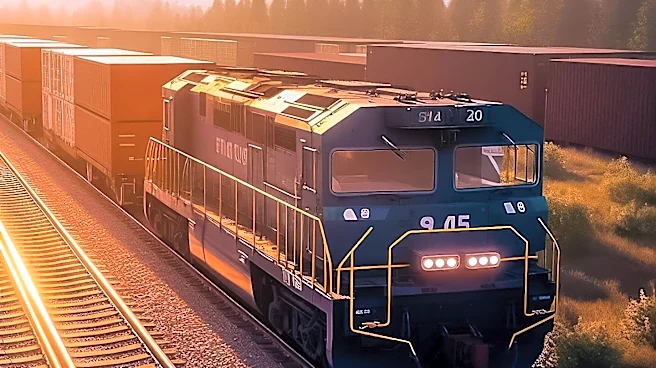
Union Pacific Railroad has received the first stick of rail from Rocky Mountain Steel Mills' new long rail mill in Pueblo, Colorado. This marks the official start of operations at the $1.2 billion facility, which is the only fully dedicated steel rail mill in the United
States. The new mill is a significant investment in American manufacturing and aims to enhance domestic steel production. Union Pacific and Rocky Mountain Steel have a longstanding partnership, dating back to 1882, and have recently renewed a seven-year contract for the domestic production of steel rails. The new facility is designed to produce 100-meter lengths of premium rail, which require fewer welds and improve track safety and reliability.
Why It's Important?
The opening of the new rail mill is a major boost for the U.S. steel industry, providing jobs and supporting domestic manufacturing. It underscores the importance of reliable rail transportation in maintaining the country's infrastructure and supply chain. The facility's use of Electric Arc Furnace technology and solar power significantly reduces CO2 emissions, aligning with environmental sustainability goals. This development strengthens the partnership between Union Pacific and Rocky Mountain Steel, highlighting the potential of American companies to collaborate on enhancing domestic supply chains and investing in future infrastructure.
What's Next?
The new rail mill is expected to bring efficiency gains to the rail industry by producing longer rails that require fewer welds. This could lead to improved safety and reliability for major railroads like Union Pacific. The facility's focus on sustainable production methods may set a precedent for future steel manufacturing projects. As operations ramp up, the mill will continue to produce high-performance steel products for various industries, potentially expanding its market reach and influence in the North American steel sector.
Beyond the Headlines
The investment in the new rail mill reflects a broader trend towards sustainable manufacturing practices in the steel industry. By utilizing renewable energy sources and advanced production techniques, the facility not only reduces its environmental impact but also positions itself as a leader in eco-friendly steel production. This could influence other manufacturers to adopt similar practices, contributing to a more sustainable industrial landscape in the U.S.