
What's Happening?
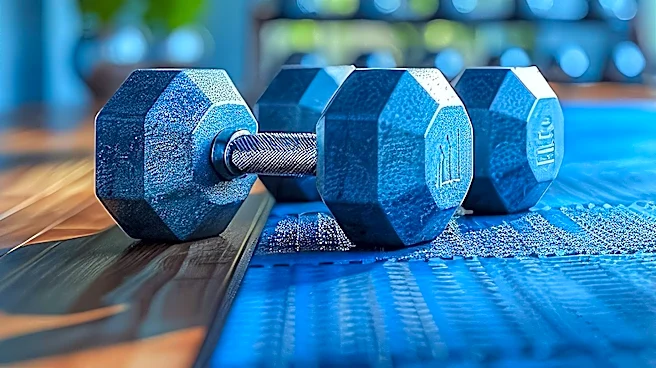
Dr. Vonda Wright, a double board-certified orthopedic surgeon and healthy-aging expert, recommends that women over 50 should lift heavier weights to maintain strength and muscle mass. She proposes a '4x4
formula' for women who have built a solid strength base: four repetitions for four sets with heavier weights. This approach is particularly crucial for women experiencing menopause, as declining estrogen levels reduce the body's natural signals for muscle maintenance. Dr. Wright explains that lifting heavier provides the necessary 'anabolic stimulus' to repair and build tissue, including muscle, effectively replacing the role estrogen once played. She stresses that it is never too late to begin strength training, asserting that the body will respond to strategic stress regardless of age or skill level. The goal is not just hypertrophy (bigger muscles) but also power, which is essential for functional movements like getting off the floor or lifting objects overhead.
Why It's Important?
Dr. Wright's advocacy for heavier lifting among women over 50 is critically important for addressing age-related muscle and bone density loss, particularly in the context of menopause. Estrogen decline significantly impacts muscle mass and bone health, increasing the risk of falls, fractures, and reduced independence. By promoting heavy lifting, Dr. Wright highlights a proactive strategy to mitigate these effects, emphasizing power and functional strength for healthy aging. This approach challenges conventional notions that older adults should stick to lighter weights and higher repetitions, instead focusing on the intensity needed to stimulate muscle growth and bone density. The benefits extend beyond physical strength, including prevention of insulin resistance, release of 'longevity proteins' like Klotho, support for brain health through galanin, and a healthier metabolism via irisin, making it a holistic strategy for well-being.
What's Next?
Women over 50, especially those in or approaching menopause, are encouraged to consult with healthcare providers and qualified fitness professionals before embarking on a heavy lifting regimen. The initial step involves building a foundational strength base, after which Dr. Wright's 4x4 formula can be gradually implemented. Fitness programs and resources tailored to older women, focusing on progressive overload and proper form, are likely to gain more prominence. Educational campaigns emphasizing the benefits of heavy lifting for healthy aging, particularly for women, could become more widespread. Research into the specific physiological responses of older women to various strength training protocols may also expand, further refining recommendations for optimal health outcomes. The long-term goal is to empower women to maintain independence and quality of life through robust physical health.
Beyond the Headlines
The deeper implications of Dr. Wright's recommendations touch upon societal perceptions of aging and female health. Historically, fitness advice for older women has often been conservative, focusing on low-impact activities. Dr. Wright's stance challenges this, advocating for a more aggressive and empowering approach to physical health that recognizes women's capacity for strength at any age. This shift can help dismantle ageist stereotypes and promote a more active and resilient image of older women. Furthermore, by linking muscle health to broader systemic benefits like brain health and metabolism, her advice underscores the interconnectedness of bodily systems and the profound impact of physical activity on overall longevity and well-being. It encourages a paradigm shift from merely managing age-related decline to actively pursuing enhanced vitality and functional capacity throughout life.