
What's Happening?
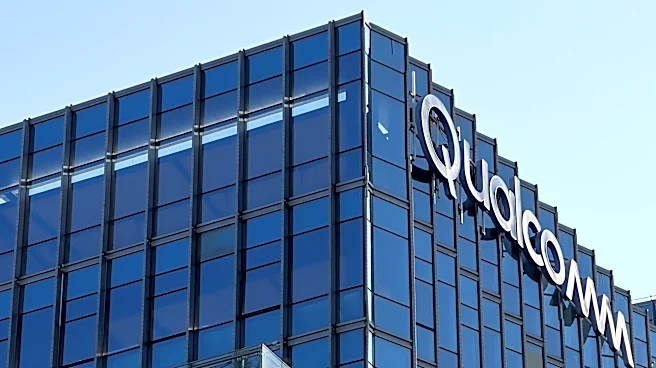
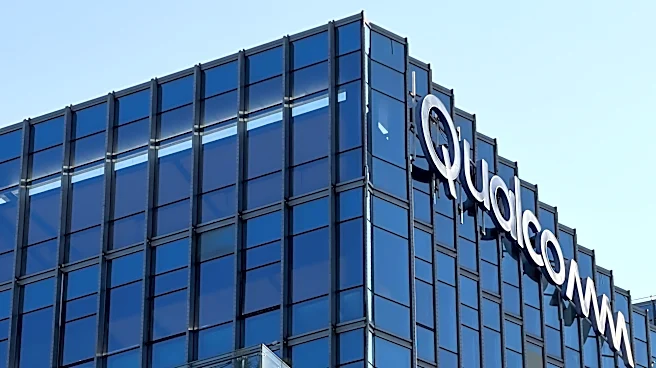
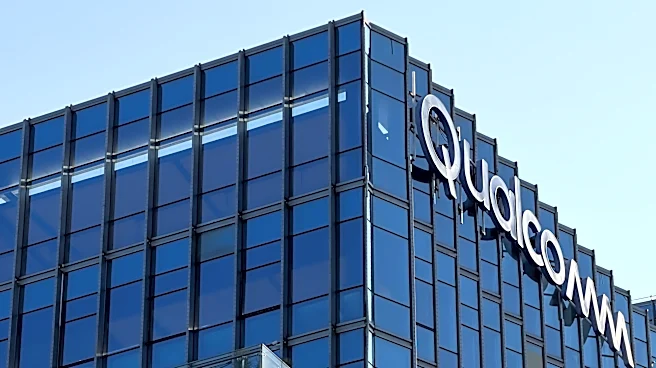
Qualcomm is actively expanding its market presence beyond traditional smartphone chipsets, focusing on new opportunities in networking, industrial IoT, edge computing, and AI infrastructure. The company
reported fiscal Q3 2026 revenue of $9.9 billion, with combined automotive and IoT semiconductor revenue increasing by 28% year-over-year. At its June 2026 Investor Day, Qualcomm raised its fiscal 2029 non-handset revenue target to $40 billion, with over $14 billion projected from IoT, including an $8 billion opportunity in industrial applications, networking, and robotics. Qualcomm's Dragonwing portfolio is central to this strategy, addressing industrial networking, wireless connectivity, edge AI, and fixed wireless access, supporting technologies like 5G customer-premises equipment and industrial gateways.
Why It's Important?
This strategic diversification is crucial for Qualcomm as the telecom semiconductor market evolves. While global 5G subscriptions are growing, worldwide radio access network (RAN) revenue is expected to remain flat in 2026. This necessitates a shift towards new growth areas. Qualcomm's expansion into broadband access upgrades, AI data center connectivity, and network modernization offers significant potential. By leveraging its expertise in wireless communication, Qualcomm aims to convert semiconductor design wins into recurring revenue from telecom equipment manufacturers and network operators. This move positions Qualcomm to compete with other major players like Broadcom, Marvell, NVIDIA, and Intel in these emerging high-growth segments, reducing its reliance on the mature smartphone market.
What's Next?
Qualcomm will continue to develop and deploy its Dragonwing portfolio, aiming to secure design wins and partnerships in the industrial IoT, 5G fixed wireless access, and broadband markets. The company's challenge lies in effectively converting these design wins into substantial recurring revenue. Future developments will likely include further integration of AI capabilities into its networking and edge computing solutions. The success of these initiatives will be critical for Qualcomm to achieve its ambitious non-handset revenue targets by fiscal 2029 and solidify its position as a diversified technology leader in the rapidly expanding connected ecosystem.
Beyond the Headlines
Qualcomm's strategic pivot reflects a broader industry trend where technology companies are seeking to capitalize on the convergence of 5G, AI, and IoT. This expansion has significant implications for the development of smart cities, connected factories, and advanced enterprise networks. The increased demand for specialized semiconductors in these areas will drive innovation in chip design, power efficiency, and security. Furthermore, the competition among semiconductor giants to dominate these new markets will likely accelerate technological advancements, ultimately benefiting end-users with more robust, intelligent, and interconnected systems. The long-term impact could reshape various industries, from manufacturing and logistics to healthcare and transportation.