



What's Happening?
A zoning board hearing in Allentown concerning a proposed data center on Emmaus Avenue has been postponed. The hearing was scheduled to address a legal zoning appeal filed by Camelot for Children, a non-profit organization located near the proposed development
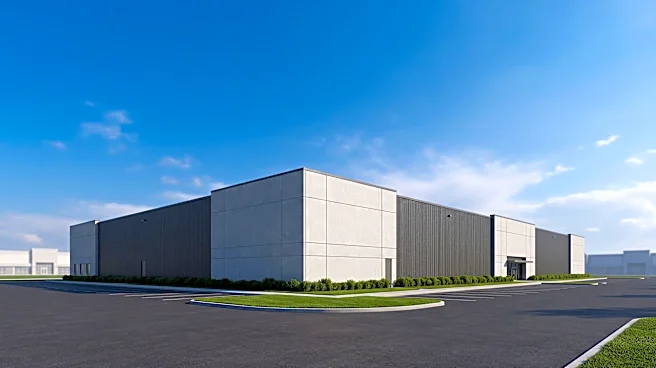
site. Quantm LLC, a Philadelphia-based data center development company, plans to convert a 224,000-square-foot warehouse at 2401 W. Emmaus Ave. into a data center. Both parties involved, Camelot for Children and Quantm LLC, requested the postponement, and a new date has not yet been determined. The city had previously determined that a data center could be considered a 'permitted-by-right' use in the I-3 zoning district where the building is located, classifying it as 'closely allied' to manufacturing usage. However, Camelot for Children's attorney, Kevin Fogerty, argued in a July 6 appeal that there is a 'gross disparity' between data center and manufacturing uses, making the city's determination inappropriate.
Why It's Important?
This postponement highlights ongoing tensions between community interests and commercial development in Allentown. The proposed data center represents a significant industrial project that could bring economic activity and technological infrastructure to the area. However, its proximity to a non-profit serving chronically and terminally ill children raises concerns about potential impacts on the vulnerable population. The legal challenge regarding the 'permitted-by-right' classification of data centers in industrial zones could set a precedent for future development projects, influencing how similar facilities are approved or contested across the region. The outcome of this zoning dispute will be crucial for both developers seeking to expand their operations and community groups advocating for the well-being of local residents and the preservation of neighborhood character.
What's Next?
The Allentown zoning supervisor, Michael Handzo, confirmed that a new date for the postponed hearing has not yet been set. Attorneys for both Camelot for Children and Quantm LLC agreed to the postponement, indicating a potential for further negotiations or a more thorough review of the project's implications. The proposed data center still requires a vote from the city's planning commission to proceed with construction. The legal challenge to the city's interpretation of zoning regulations will likely continue, potentially leading to further appeals or revisions in local zoning ordinances. Stakeholders, including the developer, the non-profit organization, and local residents, will be closely monitoring the rescheduled hearing and subsequent decisions by the planning commission, which will ultimately determine the project's future.
Beyond the Headlines
The debate over the Allentown data center reflects a broader national discussion about the balance between economic development, technological advancement, and community welfare. Data centers, while essential for the digital economy, are often large-scale operations with significant environmental footprints, including energy consumption and potential noise pollution. The legal challenge to the 'permitted-by-right' status of data centers in industrial zones underscores the evolving nature of urban planning and the need for clear, updated regulations that address new types of industrial uses. This case could influence how municipalities nationwide classify and regulate data centers, potentially leading to more stringent environmental impact assessments or community benefit agreements. It also highlights the increasing role of non-profit organizations and community advocacy in shaping local development decisions.