






What's Happening?
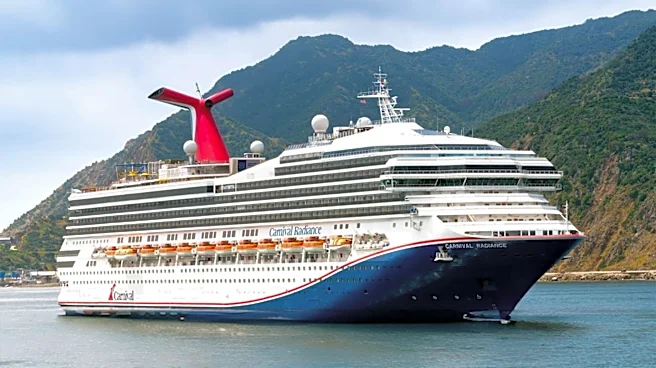
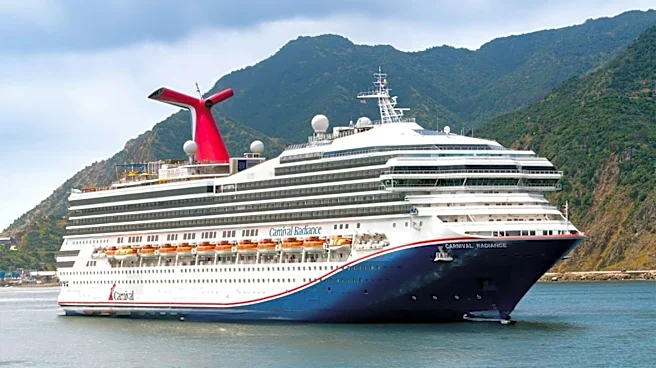
Carnival Cruise Line has placed an order for two new cruise ships with Italian shipbuilder Fincantieri, a contract valued at over $2.2 billion. The ships are scheduled for delivery in 2033 and 2035. Each vessel will be approximately 130,000 gross tons,
feature around 1,650 guest cabins, and operate primarily on liquefied natural gas (LNG). This decision marks a continuation of Carnival's reliance on European shipyards for its fleet expansion. Fincantieri, which has built 76 ships for Carnival's brands over the past three decades, will construct these new vessels at its Marghera shipyard near Venice. Carnival opted for a design that can be adapted for other brands within its fleet, aiming for reusability rather than developing new designs for each order. This order highlights the global nature of cruise ship construction, with European shipyards dominating the market due to specialized expertise and established supply chains.
Why It's Important?
This order underscores the significant role European shipbuilders play in the global cruise industry, particularly for U.S.-based companies like Carnival. Despite Carnival's extensive operations in Florida, including its global headquarters in Miami and vessels utilizing major Florida ports, the construction of its most valuable assets remains overseas. A 2025 Government Accountability Office report indicated that U.S. shipyards face challenges competing for international commercial work, including cruise ship construction, due to higher costs and limited economies of scale. This dynamic means that while Florida benefits substantially from the economic activity generated by the cruise industry, the high-value manufacturing contracts for these ships are secured by European entities. The continued investment in LNG-powered ships also signals a commitment to more environmentally conscious operations within the cruise sector, aligning with broader industry trends towards sustainability.
What's Next?
The construction of these two new ships will keep Fincantieri's Marghera shipyard busy well into the next decade, with deliveries slated for 2033 and 2035. Carnival will continue to expand its fleet with modern, LNG-powered vessels, potentially influencing future design and operational standards across its brands. For U.S. shipyards, the situation suggests a continued focus on military and domestic vessel construction, as competing for large-scale international commercial projects like cruise ships remains difficult. Florida will likely continue its efforts to expand its maritime workforce, as evidenced by recent federal and state funding for shipbuilding and defense manufacturing apprenticeships. However, these initiatives are more geared towards repair and naval contracts rather than establishing a competitive cruise shipbuilding industry in the U.S.
Beyond the Headlines
The persistent reliance on European shipyards for cruise ship construction reveals a deeper industrial ecosystem challenge for the United States. The specialized nature of building modern cruise ships requires a complex production line, integrating thousands of components from a network of suppliers that have developed around European shipyards over decades. Replicating this industrial ecosystem in the U.S. would demand substantial, long-term investment beyond simply providing space at a port. This situation highlights a globalized manufacturing reality where specific industries concentrate expertise and infrastructure in particular regions. While the U.S. benefits from the operational and tourism aspects of the cruise industry, the high-tech, high-value manufacturing component remains largely outside its borders, posing questions about industrial policy and the diversification of advanced manufacturing capabilities.