





What's Happening?
Conagra Brands, Inc. has released its second annual Future of Snacking report, detailing the major trends shaping the $198.2 billion U.S. snack market. The report, based on an analysis of over 53 million shopping transactions and 17,000 snacking products,
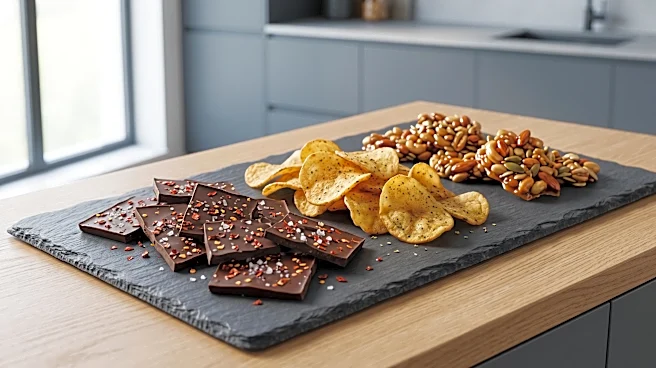
highlights three primary drivers: bold flavors, functional attributes, and indulgent offerings. Consumers are increasingly seeking snacks that provide sensory experiences, with elevated comfort flavors and 'swicy' (sweet and spicy) combinations showing significant growth. Functional snacks, a $19 billion segment, are also expanding, with protein remaining the top attribute, generating $12.1 billion in sales. Different age groups prioritize different functional benefits, such as energy and protein for Gen Z, probiotics and antioxidants for millennials, and digestive health for baby boomers. The report also notes a trend towards 'permissible indulgence,' where consumers desire both enjoyment and wellness benefits from their snacks, alongside a growing scrutiny of ingredients.
Why It's Important?
These findings are crucial for the U.S. food industry, particularly for snack manufacturers and retailers. Conagra's insights indicate a shift in consumer preferences beyond basic hunger satisfaction towards more complex demands for taste, health benefits, and ingredient transparency. Companies that can effectively balance flavor innovation with functional attributes and cater to the desire for 'permissible indulgence' are poised for growth. The emphasis on specific functional benefits for different demographics suggests a need for targeted product development and marketing strategies. The increasing scrutiny of ingredients and the rise of 'clean eating' among younger consumers, especially parents, will likely influence sourcing, labeling, and product formulation across the industry, potentially leading to a greater demand for natural, non-GMO, and organic ingredients. This trend could also impact agricultural practices and supply chains as manufacturers seek to meet these evolving consumer expectations.
What's Next?
In response to these trends, snack manufacturers are expected to continue innovating in flavor profiles, focusing on unique and experiential tastes, including more 'swicy' and elevated comfort flavors. There will likely be a sustained push towards developing functional snacks that offer combined benefits like protein with fiber, digestive health, and hydration. Companies will also need to adapt to the growing consumer demand for ingredient transparency and 'clean label' products, potentially leading to more detailed labeling and a focus on ingredient sourcing. The industry may see an increase in products catering to specific demographic needs, such as energy-boosting snacks for Gen Z or digestive health-focused options for baby boomers. Retailers will likely adjust their product assortments to reflect these preferences, giving prominence to snacks that align with functional, flavorful, and health-conscious trends. Investment in research and development for new ingredients and formulations that meet these evolving consumer demands is also anticipated.
Beyond the Headlines
The Conagra report underscores a broader cultural shift in how Americans view food, moving beyond mere sustenance to a more holistic approach that integrates health, wellness, and sensory pleasure. The rise of functional snacks and the demand for ingredient transparency reflect a growing consumer awareness and desire for control over their dietary choices. This trend has implications beyond the snack aisle, potentially influencing other food categories and even the restaurant industry. The report also highlights the impact of digital behavior and social sharing on food trends, as consumers seek experiences they can share online. This suggests that the 'shareability' and aesthetic appeal of snacks could become increasingly important. Furthermore, the focus on 'permissible indulgence' indicates a societal attempt to reconcile the desire for treats with health goals, leading to a market for products that offer both satisfaction and perceived wellness benefits. This could drive innovation in healthier alternatives for traditional indulgent foods.