





What's Happening?
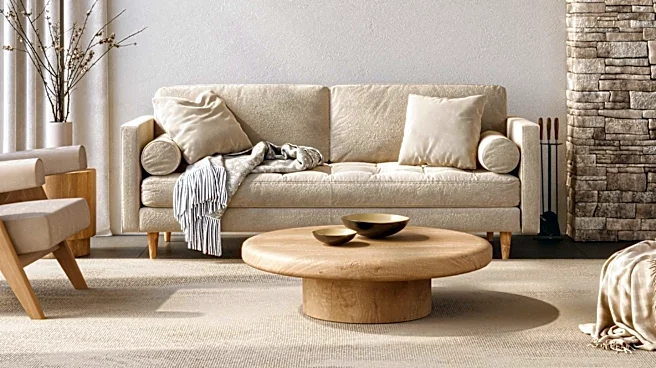
Wooden coffee tables are a central element in U.S. living rooms, offering a blend of functionality and style. Current trends highlight models that combine the rustic aesthetic of farmhouse style with modern design elements, such as geometric structures
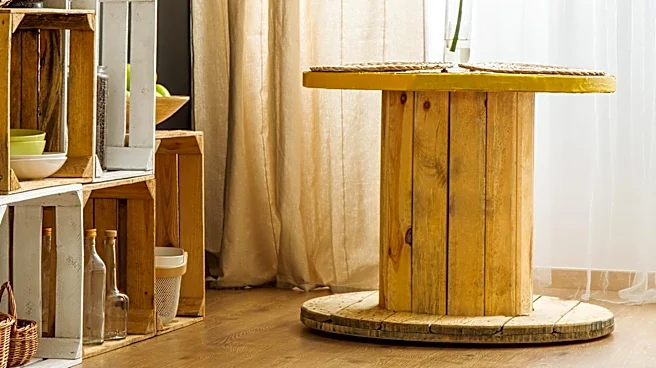
and clean lines. For instance, a popular model features an antique brown wood grain finish with a contemporary geometric structure. Buyers are considering factors like shape and dimensions, with round tables favored for flow and safety, and square tables for larger seating arrangements. Functionality, particularly storage, is also a key consideration, with two-tier designs and integrated drawers providing practical solutions for organization. The choice of wood is often paired with other materials like black metal for an industrial look, or celebrated in its natural state for a rustic or farmhouse feel, emphasizing grain and imperfections.
Why It's Important?
The evolving preferences in wooden coffee table designs reflect broader shifts in U.S. home decor and consumer values. The integration of rustic and modern styles indicates a desire for warmth and authenticity combined with contemporary aesthetics, influencing furniture manufacturers and retailers. This trend impacts the supply chain for wood and other materials, as well as design and manufacturing processes. The emphasis on functionality, such as optimized storage, addresses the practical needs of modern living spaces, where efficiency and organization are highly valued. For consumers, these choices allow for greater personalization of their living environments, contributing to overall well-being and comfort. The market for wooden furniture, therefore, is not just about utility but also about lifestyle and aesthetic expression, driving innovation in design and material combinations.
What's Next?
The market for wooden coffee tables is expected to continue evolving with a focus on versatile designs that cater to diverse aesthetic preferences. Manufacturers will likely explore new combinations of wood with other materials to create hybrid styles that appeal to both rustic and modern sensibilities. There will be an ongoing emphasis on smart storage solutions and multi-functional designs to maximize utility in increasingly compact living spaces. Consumers can anticipate a wider range of options that offer durability, ease of assembly, and sustainable sourcing. The trend towards personalized home decor suggests that customizable features and unique design elements will become more prevalent, allowing individuals to curate their living rooms with pieces that truly reflect their style.
Beyond the Headlines
The choice of a wooden coffee table, particularly one that blends rustic and modern elements, speaks to a deeper cultural narrative in the U.S. It represents a desire to balance the fast-paced, technologically driven aspects of modern life with a longing for comfort, tradition, and connection to nature. The 'rustic aesthetic' in home furnishings often evokes a sense of nostalgia, craftsmanship, and a return to simpler times, providing a psychological anchor in an ever-changing world. This trend also highlights the importance of the living room as a central gathering space, where furniture choices contribute to the overall atmosphere and facilitate social interaction. The emphasis on natural materials and authentic finishes can also be linked to a growing environmental consciousness, where consumers seek products that are not only aesthetically pleasing but also durable and responsibly made, influencing ethical considerations in manufacturing and consumption.