
What's Happening?
The American mining company Albemarle has been ordered to pay a fine of approximately $4.18 million for environmental violations related to its lithium extraction operations in Chile's Salar de Atacama.
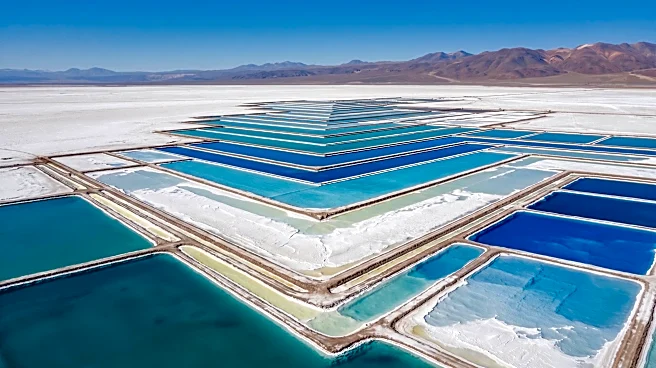
The First Environmental Court rejected Albemarle's appeal and upheld the sanction imposed by the Superintendence of the Environment (SMA). The violations include exceeding the authorized brine extraction volume between October 2019 and September 2020, where the company extracted 452.3 liters per second against an authorized limit of 442 liters per second, resulting in an over-extraction of 324,395 cubic meters. A more significant violation involved a delay in reducing pumping after an environmental alert was triggered on February 2, 2021. Despite the activation of the BA-07 indicator, designed to detect changes in the aquifer system, Albemarle only began reducing extractions in April, leading to an additional over-extraction of 639,517 cubic meters during February and March. The Salar de Atacama is a sensitive endorheic basin, meaning its water systems are closed and highly susceptible to changes in water and brine balances, impacting local ecosystems and communities.
Why It's Important?
This ruling underscores the critical environmental challenges associated with lithium mining, particularly in arid regions like the Atacama Salt Flat. Lithium extraction from brines can significantly alter the water balance of these delicate ecosystems, affecting wetlands, meadows, and the species dependent on them. The case highlights the necessity of strict adherence to environmental permits and rapid response mechanisms to prevent irreversible ecological damage. For the U.S. and global markets, where lithium is a crucial component for electric vehicle batteries and other technologies, this decision emphasizes the growing scrutiny on sustainable sourcing and the environmental footprint of mineral extraction. Companies like Albemarle, which also explore lithium resources in other regions, including Argentina, face increased pressure to implement and maintain robust environmental monitoring and mitigation strategies. The financial penalty serves as a deterrent and a reminder that environmental compliance is a non-negotiable aspect of mining operations, impacting both operational costs and corporate reputation.
What's Next?
Albemarle is currently developing a direct lithium extraction (DLE) project in Atacama, which aims to recover the mineral from brine and reincorporate part of the processed liquid back into the system. The environmental challenge moving forward will be to determine, through independent controls and continuous monitoring, if these new technologies can effectively reduce the net extraction of brine and alleviate pressure on the Atacama ecosystems. The outcome of this DLE project and its environmental impact assessments will be crucial for Albemarle's future operations and could set a precedent for lithium extraction practices globally. Regulatory bodies will likely intensify their oversight of mining activities in sensitive ecological zones, potentially leading to stricter environmental regulations and more frequent inspections. The company will need to demonstrate a clear commitment to sustainable practices to regain public trust and ensure long-term operational viability in environmentally sensitive areas.
Beyond the Headlines
The Albemarle fine extends beyond a simple penalty, touching upon the broader ethical and legal dimensions of resource extraction in vulnerable environments. The ruling does not declare all exploitation of the salt flat illegal nor does it confirm irreversible environmental damage, but it highlights the inherent risks and the need for continuous vigilance. The case also has implications for other regions, such as Argentina, where Albemarle is exploring lithium resources, suggesting that similar environmental scrutiny could be applied there. This situation could catalyze a shift towards more responsible mining practices, pushing companies to invest further in advanced, less impactful extraction technologies and to prioritize ecological preservation alongside economic gains. The long-term shift could involve a re-evaluation of global supply chains for critical minerals, favoring sources that demonstrate verifiable environmental stewardship and robust community engagement, ultimately influencing consumer choices and investment decisions in the green technology sector.